Tuesday, March 9, 2021

Younger Next Year, Part II: A Second Glance


Younger Next Year, Part II:  A Second Glance


If you and I are both lucky, you glanced through my first review of Younger Next Year.  Possibly, you found some good information, but decided to wait a bit, or got distracted by that cold beer in the frig.


Younger Next Year, Part I


Maybe you just need some more details.  After all, a new you is not just about exercise, but about being healthy and happy. You are in luck! As usual, I do everything I possibly can for my three faithful readers.


First two rules: 1. Get a physical checkup before you start.

                               2.  Unless you’re used to exercising, start slowly.


Let’s lean a little heavier into the science of exercise.  In a nutshell:  Your body decays everyday.  The book lays out specifically what forms decay.  For now I’ll stick to what fits under the nutshell.


According to Dr. Lodge, growing old and weak is not normal.  Cells in your body die every single day.  Natural chemicals clean up the mess and also, if you exercise, the same chemicals call on other body chemicals to come behind and repair things.  But, without exercise, there is no call for repair.  This is such a brief description that I’m almost ashamed to write it.  Younger Next Yearexplains the process in more precise detail.


But, your exercise program builds up your cells, your muscles. In other words, it repairs the body. 


Let’s step back a moment and quickly discard two normal approaches:  #1 – I’ll try it for a while and see how I like it.  #2 – I’m too busy.


#1 is a no win.  Start slowly, but commit to exercise for the rest of your life.  Chris Crowley relates the story of a middle age guy, a hundred pounds over weight, who could only walk a hundred yards. But he DID walk a hundred yards and did it everyday, losing weight and building up to a five mile walk!


#2 is a whimp-out.  At the age of 50 or older, surely you can arrange your day to get 45 minutes of heart pumping exercise.  We’re all blessed with the same 24 hours each day.


The authors use the analogy of tearing down an old house and building a new one.  As a house sits, it decays.  You bring in a wrecking crew to tear it down.  Then you bring in the construction crew to build your new house.  A sedentary person never brings in the construction crew.


Dr. Lodge explains the science. “With the chronic stress of modern life, the chemistry of inflammation persists, but the renovation never gets started.  Decay becomes a career path for your body, and your blood itself becomes an inflammatory caustic stew.”


Here’s the good news:  “You can control the cycle.  Commuting, loneliness, apathy, too much alcohol and TV all trigger the inflammatory part of the cycle (the decay).  But, daily exercise, joy, play, engagement, challenge and closeness all trigger the crucial repair.”


Don’t know about you and my faithful readers, but I love knowing I can control the situation.


Cynics may sneeringly ask, “So, what the hell do you do?”  I ignore their cynicism.  Been bike riding for about a year and my body keeps pushing me to pedal faster.  I belong to the local YMCA and swam until the cold weather hit. Now that warmer weather is just around the corner, I’ll be at it again.  Haven’t jogged in years, so I followed what the exercise magazines tell you to do. I’ve start off with a short run and short recovery walk, run and walk, run and walk, for about an hour.  If you’re lucky enough to live by a beach, it’s easy.  For me, this has turned out to be a blast!  Younger Next Year explains a host of exercises that will do the job.  Just pick one or two or three you like.


Don’t forget hitting the weights and those push-ups and pull-ups.  Both are easy ways to work the upper body, build strength, and call in that construction crew.


Yes, the book also gives interesting perspectives on nutrition and how it affects your blood, your heart, and the rest of your body.  It also convers answers to a host of questions:  Is a heart attack really a heart attack, or is what we call a heart attack really something else?  And, how are “heart attacks” and strokes similar?  Best of all:  How exercise and nutrition help you avoid both! 


Younger Next Year packs in humor, science, and loads of encouragement.  NOW, grab a copy of Younger Next Year, get motivated, and start building a NEW YOU!


News about one of the authors, Chris Crowley, who was 70 years old when the book was published.  He is now 86 and still skiing the double black slopes!


Friday, March 5, 2021

Soffritto: Classic Italian Cuisine


I’m going to show you how to make my rendition of a mainstay of the Tuscan table, Soffritto.  Long in tradition and even longer in flavor, it’s the best pasta I’ve ever tasted.  I drool just thinking about the delicious flavors that spread so lusciously over al dente pasta.


But, before I give my three faithful readers the very simple and yet astoundingly satisfying recipe, I’m going to tell you a source that will  introduce you to hundreds of Italian foods, as well as give you a good start on planning your wonderful (post-Covid-19) vacation. 


I’ve always said the French can teach anyone how to eat well.  I make an exception for the Italians who can match the French step for cooking step, with a hell-of-a-lot more humor and conviviality!  In Italy, a party blooms wherever two or more Italians gather to sip and sup!


Are you familiar with the actor Stanley Tucci?  He has a fun filled and inspiring eponymous show, on CNN-on-demand, whose full title is “Stanley Tucci Searching for Italy.”  


Tucci, who travels across the 20 regions of Italy and who proudly proclaims “I’m Italian on both sides,” invites viewers to meet interesting people who live for food, preparing it, growing it, maintaining the region’s traditions and who give you quick as a wink culinary ideas. In short, it’s a blast!


In one episode, in Tuscany, where Tucci explores a dozen wonderful dishes, one dish quickly caught my eye for two reasons:  It was described as the heart of ‘poor food’ and looked incredibly simple to make.  Once again, I call upon my three faithful readers to affirm my kitchen motto:  I don’t make anything that’s difficult!  An addend is:  I don’t make anything YOU can’t make in your kitchen.


But, Soffritto, loosely translated as sautéed, goes beyond simple, into the realm of “it’s so simple it can’t be good!”  Oh ye of little faith and even less imagination.


Another thing about Soffritto, it is completely vegetarian and can also be vegan if you leave off the cheese, or substitute that semi-cheese that really wants to be cheese, but hasn’t got the guts.


Ready to cook and eat?  One warning: These simple ingredients do take some time to become out-of-sight delicious.


Soffritto


Ingredients


2 carrots, peeled and minced

1 onion, also minced

3 stalks celery, minced

Olive Oil and salt (more on these…keep reading!)

Feel free to double or triple the ingredients

28 oz can of Italian crushed tomatoes, plus any other tomatoes you care to add.

Pasta of your choice, but not a stringy pasta like spaghetti or linguini.


Why do I specify Italian tomatoes?  Two reasons:  depth of flavor and a natural sweetness.  You will be amazed!


A note about Olive Oil.  You will use a slosh of it while cooking and also pour some to put in the pasta water, and lightly sprinkle some over the cooked pasta when serving.


A note about salt.  Tuscans do not use salt on this dish.  In the bad old days when Italy (which did not become the united country of Italy until 1861.) was a collection of city-states and kingdoms, Pisa controlled the salt trade.  Citizens of Florence indignantly refused to lower themselves and pay Pisa’s tax on salt.  However, to assuage my un-traditional taste buds, I added a little salt.


Puttin’ It Together!


Put the diced vegetable in a large pan, add a slosh of olive oil and cook slowly until the vegetables are soft.  This took about 45 minutes.


Add the can of crushed tomatoes and cook another 45 minutes, without covering the pan.  Allow the mixture to thicken.


NOTE:  I made a big batch of Soffritto, so I used four plump Roma tomatoes, three heirloom tomatoes, diced them and added them after the vegetables were soft, then cooked the tomatoes down before adding the Italian crushed tomatoes, then cooked longer to once again thicken the sauce.


Serve over al dente pasta, add a delicate slosh of olive oil and sprinkle grated Parmesan or another dry Italian cheese over the top.


I had this for supper and my household supervisor preferred that I not heat it up again for breakfast.  I bit my tongue and swore softly.


However, despite the possibility of objections, there will be Soffritto for lunch and dinner.


When you try this dish, don’t forget to hoist a full glass of Italian white wine and add Mille Grazie! to your blog comments!  And be sure to tell your friends!


Sunday, February 21, 2021

Biscottis Restaurant, Jacksonville Florida


Jacksonville Florida, by area, is the largest city in the United States.  Can’t be true?  Hey, I seldom lie and when I do it’s not about something as important as this!


And Jacksonville has an array of restaurants that rivals cities of the same size….yes, that was a stab at humor.  But, J-town does have some very suitable eating establishments and the other night, my faithful companion joined me for a night out, complete with meal and libations.  She was the evening’s chauffeur, so for her, libation was singular.  A joyous evening to be savored for the best part of two hours at one of our new favorite restaurants, Biscottis. 


The young lady at the entrance, who took my name and found us suitable seating, was a good introduction to the tone of the restaurant.  She was polite, dressed nicely, and did her duties efficiently.  In short, a delight.


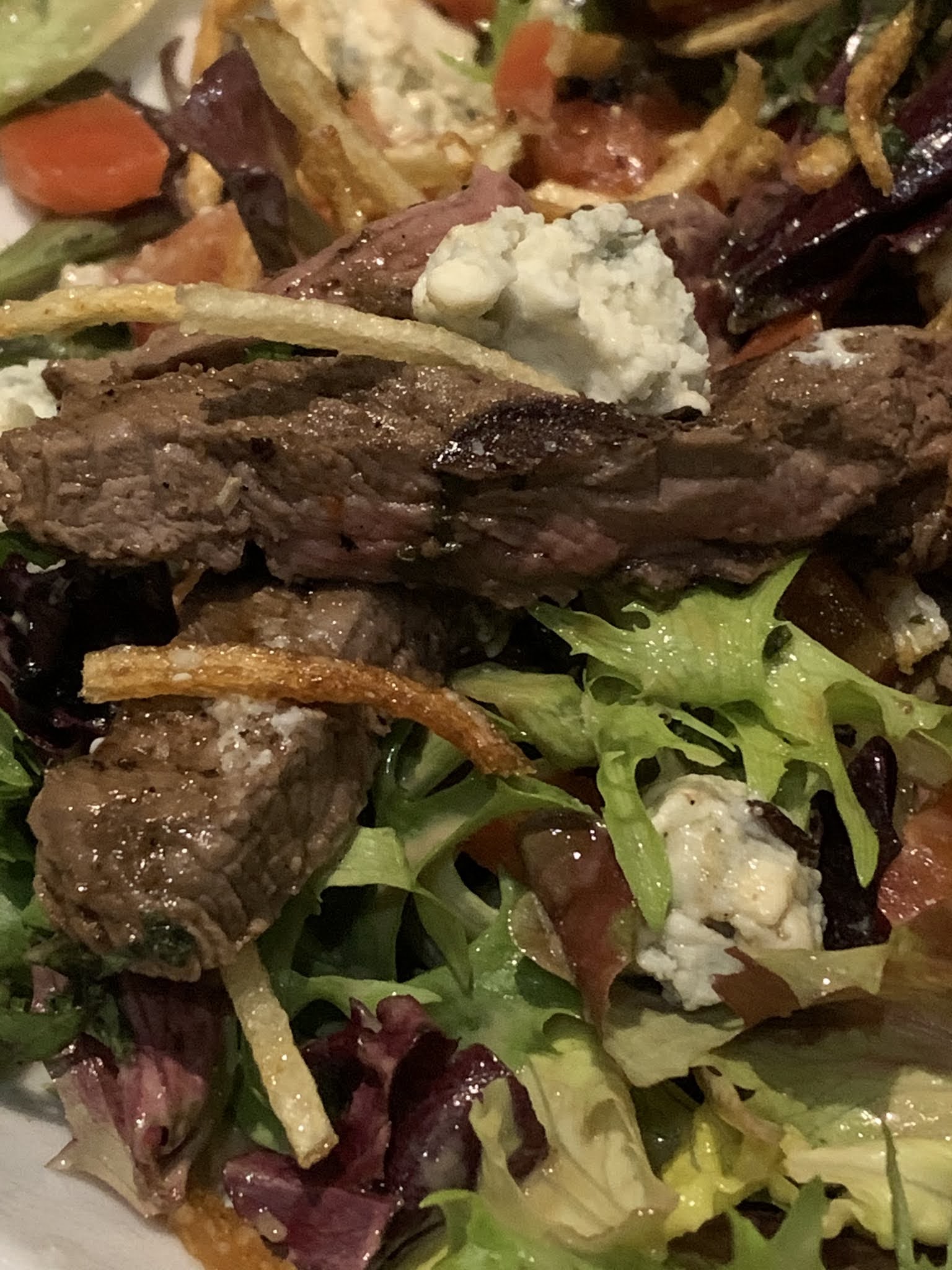
Our server on this evening was Will, who recited the menu, with full details of how each dish was prepared.  He listened carefully to our tastes and interests and when he brought the dishes, they lived up to his superlatives, from the excellent perfect Manhattan and wine selection, to the crab and artichoke appetizer, to the bruschetta (another appetizer) to the wonderful salads:  Thai with marinated chicken slices, and another with sliced skirt steak over greens.


I ran through the order rather quickly, in contrast to our languid consumption, inspired by the beautiful presentation.  The photos will give you a better idea than my descriptions, but I do need to add some high notes about the designs and flavors.   We’ll get to the restaurant’s atmosphere further down.


The Bruschetta came as a warm loaf, partially sliced, with mozzarella in between slices and delightfully marinated tomatoes strewn over the top.  The bread was soft instead of the usual crisped slices, but that only made it a new and lovely adventure in Italian tastes.


The crab and artichoke dip came with untoasted slices of another style of bread, also delicious.  A quick note:  At Biscottis, all baking is done in house and done well!!!


The salads were lightly seasoned, highlighting the proteins and the greens.  Let it be known, we ate slowly, savoring each bite and politely sharing with each other, amid envious eyes and comments of  “I should have ordered that.”


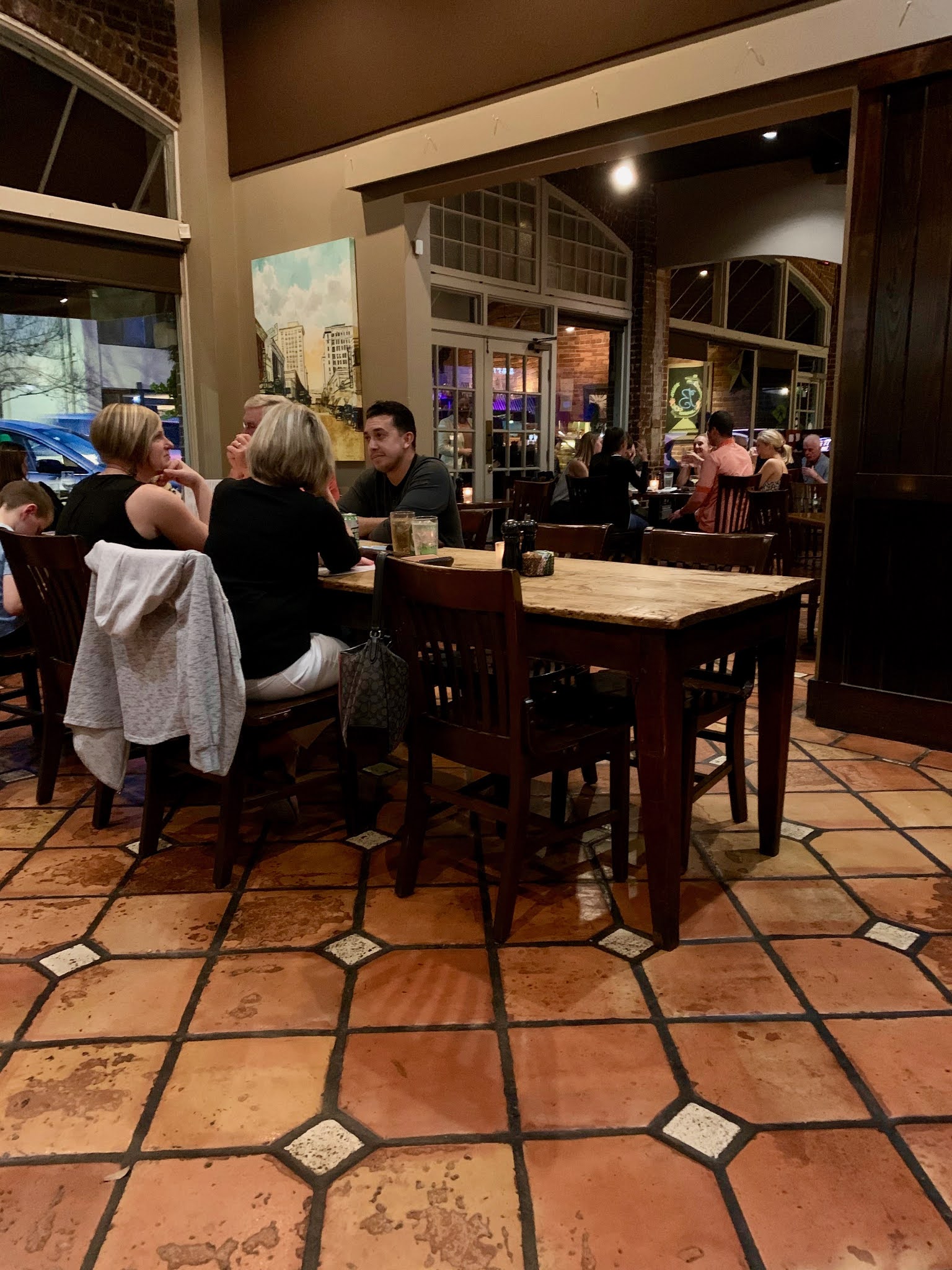
Now a note about the atmosphere.  The small, but tasteful bar is so well done, it reminds me of the darkly paneled and subdued lighting of bars we’ve visited in Italy.  Delightfully dark and intimate.  Have to make time to sit at the bar next time we visit. And the rest of the restaurant is calming and so well designed.  A beautifully tiled floor, such well-accomplished artwork, and comfortingly toned walls.


But, folks, that ain’t all!  We finished with sharing a croissant bread pudding, topped with a scoop of vanilla ice cream.   This is the all-consuming type of dessert that even banishes fond memories of your teenage, backseat dalliances. 


As “Arnuld” did not famously say,  W’re comin’ back, y’all!


Saturday, February 20, 2021

Younger Next Year: A guide to living like 50 until you’re 80 and beyond


Younger Next Year: A guide to living like 50 until you’re 80 and beyond


The books are separated by sex into two volumes, which I call: Studly Once More, and Back in a Bikini.


Here’s the premise, shamelessly plagiarized from the book jacket: Younger Next Year is about how men (and women) can turn back their biological clocks.  How they can become functionally younger every year for years to come, and continue to live with vitality and grace into their eighties and beyond.  How they can avoid 70 percent of the decay and eliminate 50 percent of the injuries and illnesses associated with getting older.


Sadly, it does not cover how to down beer faster than a teenager at a keg party.  Nor will young men swoon over your luscious bod.  Well, maybe they will after the keg party.


The authors are Chris Crowley, a normal guy (70 years old) following the precepts and concepts of the book, and Henry S. Lodge, M.D., a board certified internist whose name you’ll find on many surveys of best doctors in New York, America, and the world.


Chris’ journey begins with a trip to Dr. Lodge for a routine checkup.  He’s in fairly good shape, but a little overweight.  Dr. Lodge is pleased, generally speaking.  Doctors are never completely pleased and usually for good reasons.  My father once asked and answered a rhetorical question:  Why the hell am I going for a checkup?  The doc’s just going to tell me to lose weight and get more exercise!  Yes, he was pissed at the doctor!


Dr. Lodge avoided the usual and approached Chris in a positive way.  …basically, can be as athletic, vigorous, and alert as you were at fifty until you’re eighty or older.


Yeah, but HOW?


The doc continued:  Hard to summarize, but there are three things: Exercise. Nutrition. Commitment.


Doc, I need some details!


Do hard exercisse six days a week, and on two of those days also do strength training.  A closer look at “hard exercise” doesn’t mean an unmanageable Olympic effort, but it does mean swimming, biking, or numerous other ways that get your heart rate up.  And it also means the dedication to do it six days a week.


There’s another interesting concept at play. With two authors coming at it from both doctor and patient directions, Younger Next Year promotes positive, interesting and understandable perceptions.   Doctor Lodge covers the physiological and anatomical details of resetting your “age clock,” while Chris (who lost 40 pounds, by the way) walks you through the “regular guy” reality of resetting your life and having fun doing it.


Two words give you the concept:  Stay Active!  But those two words are so broad that without getting the full explanation, motivation, and coaching that Younger Next Year gives, they float around loosely in a cloud, leaving you to settle back, have another beer and promise yourself you’ll think about it, as soon as you have nothing better to do. 


How to break the inertia and stay motivated?  Pick out exercise(s) you enjoy and look forward to.  Take the slow approach. Listen to your body and let it tell you when you’re ready to pick up the pace. Keep going!  It’s going to get better!


What Younger Next Year really tells you is YOU CAN DO IT and what it gives you is a doable plan.


In short order, you’ll notice how proper diet and exercise leaves you with more pep and a brighter outlook, improves creativity, and makes you more aware of life’s possibilities?  Ready for that?  Well, buy Younger Next Year before you order anything else from Amazon.


It’ill pump up your motivation, and I’m telling you, you’ll feel younger next year.

Sunday, February 14, 2021

Taters and Yams


Sweet ‘Taters and Yams


After I published the fabulous recipe for sweet potato bread, but way before the accolades rolled in from my three faithful readers, a stern voice from across the room suggested the article was not complete and neglected to dwell on points of interest, such as sweet potatoes versus yams, their origins and history, how each should be prepared, along with brilliant recipe suggestions.  Only surprise was that she didn’t also desire that I write the history of the Irish potato famine and a through discussion of why the Brits call baked potatoes, jacket potatoes.


 Sweet Potato Bread Recipe


Normally I would mount a cogent counter proposal, emphasizing her whiny complains, but her ladyship, armed with set and pouty lips, had already turned her attention to her historical novel, Lord Eagerly and the Unstable Stable Girl, no doubt a riveting tale of lost lands and awkwardly inconvenient virginity.  I had no doubt that no matter my argument, my tale of tasty tubers would lack the depths to which Lord Eagerly would stoop. 


So, after being verbally assaulted by a mob of one, I return to Sweet ‘Taters and Yams.


Because I’m now left in a feisty, combative mood, I begin with a statement I hear often: Sweet potatoes and yams are the same.  


To that, I shake my trembling fist and bellow:  THEY ARE NOT! 


But, have faith, my faithful readers who perpetually search for truth and justice, I shall lead you to the promised land.


A quick glimpse at the photos, which I went out of my way to provide, clearly show the yam has a red skin and white flesh, while the sweet potato has brown skin looking almost like bark, and bright orange flesh.  Also the sweet potato has pointed ends, while the yam is more rounded, like a baking potato.


In fact, yams and sweet potatoes come from different families and originated from different parts of the globe, with yams coming from Africa and Asia, with the name, yam, comes from an African word, “nayami.”  


Yams are in the same family as the Lily.  Most yams are still grown in the southern and western parts of Africa and there are about 150 varieties. A rather startling fact:  yams can grow to be three feet long.  Can you dig it?


Sweet potatoes originated in South America, but have spread all over the globe, and at present there are over 1200 varieties.  Unlike yams, sweet potatoes belong to the Morning Glory family.


And the confusion goes on.  In Southeast Asia, the taro is often called a yam and in New Zealand there is the oca tuber that looks similar to turmeric and is called a yam or a New Zealand yam.


In Japan, there’s a purple-fleshed sweet potato that is incorrectly called a yam.  One look at the shape and you’ll know it’s a sweet potato.  By the way, the Japanese and especially the Okinawans make candy and ice cream from the purple flesh sweet potato.  Delicious!


But, then comes the question, do yams or sweet potatoes have anything in common with baking potatoes?  The only connection is that they are tubers.  Potatoes belong to the nightshade family, which includes tomatoes, peppers, tobacco and many more.


So, now my suddenly ‘famished for information’ readers pound their fists and scream (between sips of beer):  What is a tuber? Where do potatoes come from?  Why are they sometimes called spuds????


Slow down!  One useless piece of information at a time, please!


Tubers grow in the earth, under the plant, whether it’s potato, sweet potato, or yam.  They are energy storage cells, used by the plant to promote new growth.


The answer to the next two questions are related.  Potatoes also come from South America and were called spuds possibly because the name is similar to that of a spade used centuries ago to plant and maybe harvest potatoes.


You’ll just have to consult Herr Google or your traditional family recipe book for more sweet potato concoctions.  Yams?  In Africa they roast ‘em and finding them in the U.S. is a hit or miss proposition.  But, hey, they mostly taste about the same.


By the way, why the confusion over sweet potatoes and yams?  Any answer is a guess at best, but the confusion is great enough that the USDA requires that anything labeled yam, must also include the label sweet potato.  More blah, blah from the so-called minds of bureaucrats. 


Now, from across the room comes yet another request.  I’ll get right to it after I finish my Jim Beam….not the glass, the bottle. 


Suggestions if you have a burning desire to know more:


https://carnegiemnh.org/potatoes-sweet-potatoes-yams-whats-difference/


https://dpi.wi.gov/sites/default/files/imce/school-nutrition/pdf/fact-sheet-yam.pdf


https://www.npr.org/sections/thesalt/2013/01/22/169980441/how-the-sweet-potato-crossed-the-pacific-before-columbus

Tuesday, February 9, 2021

The Village Inn and Pub, St Simons Island, Georgia


Just mention the word ‘island’ and scenes as clear as photographs float through my frequently idle brain: Palm trees, soft sea breezes, sandy beaches, the redolence of freshly fried seafood, the brininess of gray oysters on the half shell, resting on shaved ice, meeting new friends in bikinis.  Gives me pause.  Women my age do not wear bikinis as a rule, or even as an afterthought.   Even a two-piece is chancy.  From middle age on, too many women lose confidence in their beauty, if you ask me, which no one has.


Enough Bikini talk for now, but not island talk.  One island specifically:  St Simons Island, one of a chain of islands along the south Georgia coast, known as the Golden Isles.


If you or your friends don’t own a piece of the island, ya gotta find some cute accommodations that inspire you to relax, cast your cares under the bed and exchange that sheepish grin for an all knowing smile.  I found just the place in St Simons, an adults only  (don’t get your hopes up tooooo high, anyone 16 and up is welcome), boutique hotel, nestled in the heart of town, yet hidden in the trees, offering a feeling of serene exclusivity.  The Village Inn and Pub.  There are so many pluses to this Inn that I feel like a calculator:  Wonderful rooms, with the housekeeper, Conception, at hand to keep everything pristine, and a staff that is so cordially friendly and can give you tips on where to dine and where to shop and what to see.  Nor can I forget the pub’s wonderfully cozy bar, featuring a happy hour from 5 to 7 p.m.  To top it off, at check in, you’ll be given coupons for $3 off your first drink……and guess what, the house wines are delicious and at HH, a generous pour of wine costs $3!


So you’ve found a wonderfully restful place to stay, and restaurants such as Georgia Sea Grill at a short walk, almost in front of the Inn.  Now all you need to do is find some things to do, and St Simons has plenty of those.  Don’t you dare miss historically fascinating Fort Frederica!


Now for some more bikini talk. The swimsuit grabbed its name from the Pacific Ocean’s Bikini Atoll in the Marshall island chain, where the U.S. conducted nuclear weapons tests from 1946 to 1958.


Perhaps the heat of a nuclear blast is what inspired French designer, Louis Réard to introduce his scanty swimwear at a popular Parisian swimming pool, le Piscine Molitor.  Two-piece suits came out in the 1930s, but Réard’s offering pared the two-piece down enough to barely hide the mountain range and the shag carpet, and from the looks of things, it’s still shrinking faster than a cube of sugar in a rainstorm. When you visit today’s summer beaches, be prepared to feel like an eager, amateur gynecologist. And when you do, don’t forget Atoll you so!


Now let’s get back to St Simons….or at least I will!


The Village Inn and Pub


Fort Frederica

Monday, February 8, 2021

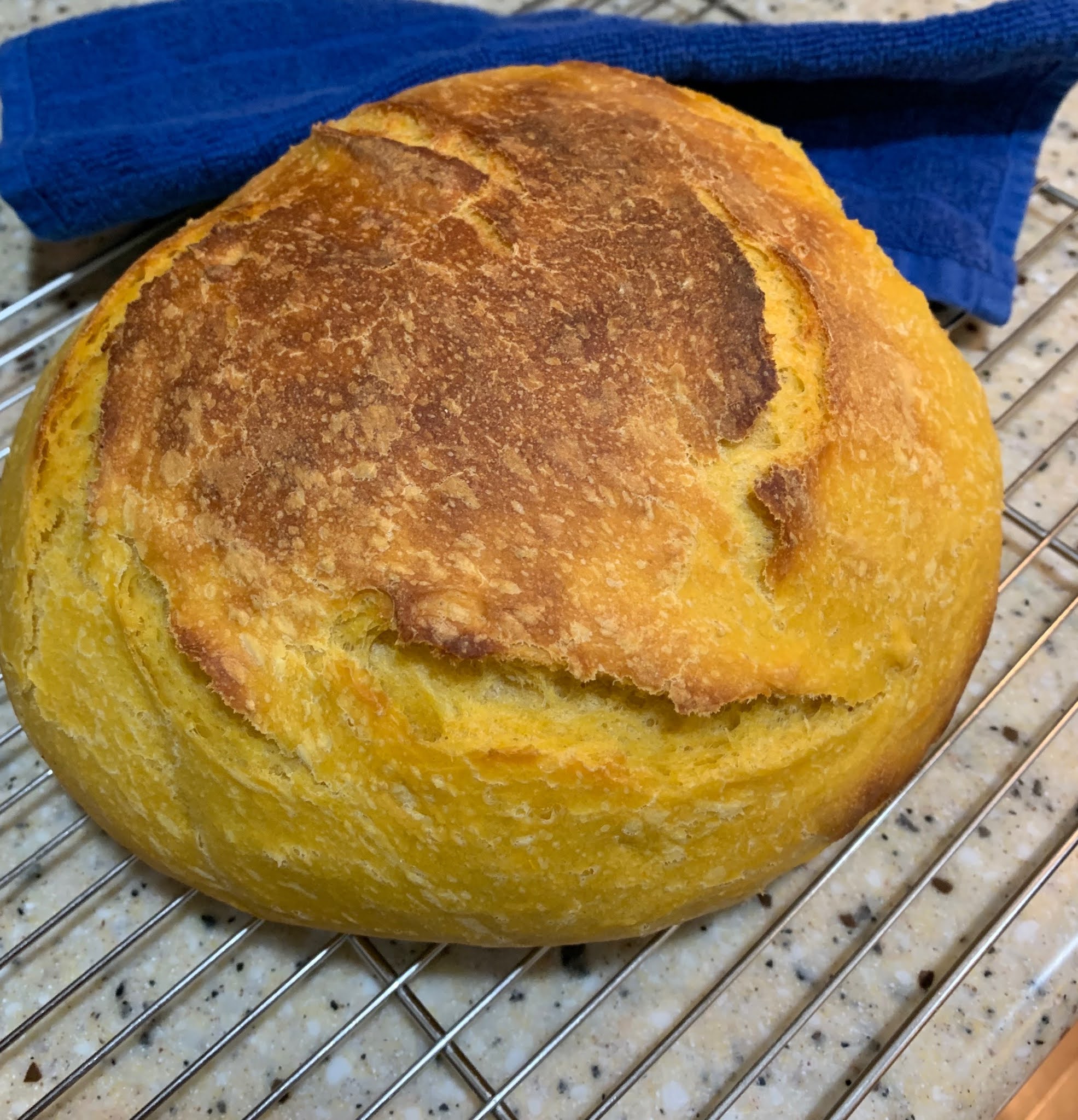
Sweet Potato Bread, Quick and Easy


Sweet Potato Bread, Quick and Easy 


As my faithful readers know, all three of you, I do quick and easy a lot, mainly because I’m as impatient as a man opening Champagne on his wedding night. “For god’s sake, honey, drink faster or this bed is gonna get soggy!”


Now my mind is well off the subject…let’s see…..oh yeah, Sweet Potato Bread.  I found this recipe on the Internet, but as many of my commanders noticed during my time in the service, I seldom follow orders as written.  Same with recipes.  Same with spousal …..oh, hell, back to bread.


First off, this bread is not sweet, but it is flavorful, and since some Internet doctor, somewhere, sometime, said sweet potatoes are healthy, it must be so.  I’m waiting and searching desperately for the same news about whiskey.  The bastards are taking their sweet time!


NOTE:  When I say ‘QUICK AND EASY,’ I’m talking about the prep time and the execution.  Since the recipe uses yeast, it does take a little bit of time to rise, but much less than many breads.


Sweet Potato Bread 

(I use a food processor)


Ingredients:


4 cups bread flour (I prefer King Arthurs, the inventor of the round table.  Took him many knights to figure it out.)

1.5 cups of baked, peeled, and mashed sweet potato (If you use canned, beware.  Lots of water and often sweetened)

1 tablespoon salt

1 package yeast

1.25 cups very warm water

Oil or another vegetable oil

Extra flour for dusting


Puttin’ it together


Put the dry ingredients in the food processor and pulse a couple of time to mix.  


Add the mashed sweet potato to the processor and mix well.


Add the very warm water and mix until the dough pulls away from the sides of the food processor bowl.  Too sticky?  Add another small portion of flour, carefully. Remix.


Turn the dough out on a well-floured surface, spread it out flatly and fold one end up and over like you’re making a thick taco, Do the same with the other end.  Turn the dough 90 degrees and fold again in the same manner. Form the dough into a bowl shape, oil it well and place it in a large, well greased or oiled bowl.  Cover.  Put it in a warm spot (I put it in my oven, with the oven light on.)


Allow it to rise two hours or a bit more.


Remove it from the oven and keep it covered.


Place a Dutch oven (with the lid on) in the baking oven and heat to 450 degrees.


When the baking oven reaches 450, remove the Dutch oven (Careful, this baby is hot!).  Put the dough in the Dutch oven, put on the lid and slide it in the oven for 25 minutes.  (I also add a tray with water on the bottom rack of the baking oven. Steam helps the bread to rise.)


At the end of 25 minutes, remove the lid from the Dutch oven, and add more water to the lower tray if necessary.  


Bake for another 15 minutes.


Remove the bread from the Dutch oven and place it on a cooling rack.  


While the bread cools, pop the cork on the Champagne and remind your honey to drink faster!