Showing posts with label Day Trips From London. Show all posts

Thursday, November 29, 2018

Oxford, UK: What a University Town!


Oxford, UK: What a University Town!

The first thing you notice when you get to Oxford is that it’s a stone city.  Massively stone.  Fortress stone.  And there is a castle here, built by one of William the Conqueror ‘s Barons.  The university is the town and the town is the university.  The vast stonewalls of the colleges spread throughout the city, with businesses and pubs fitting in where they can.

English poet, Matthew Arnold dubbed it, the “City of dreaming spires.”  Yes, spires and towers across the city skyline.

Places to see:  

TheAshmolean Museum (for art and archaeology ) Don’t you dare miss it!  Ancient Egyptian and Roman/Greek displays are extraordinary!
Christ Church Cathedral and the great hall, which was the inspiration for the fictional dining room of Hogwarts (Harry Potter).
The Alice sweet shop, where Alice Liddell shopped for candy. Alice, a family friend of Charles Dodgson (Lewis Carroll) and his inspiration for Alice in Wonderland.
Blackwell’s Books, perhaps the finest bookshop I’ve ever been in.
The Bodleian Library (known as Bodly or The Bod), it’s mainly a research library and each college has its own library.
The Martyr’s Memorial, memorializing three protestant bishops burned alive for their faith  by the Catholic Queen Mary. 
The Eagle and Child pub (sometimes called The Bird and Baby), where authors known as the “inklings,” including C.S. Lewis and J.R.R. Tolkien (Lord of the Rings) met for pints and discussion.


But, since this is a university town, let’s chat about that a moment. There are 38 Colleges and six more Permanent Private Halls  (PPHs) that form Oxford University.  Walk down any street and you’ll pass several, their high sandstone walls and picturesque inner courtyards more like fortresses than colleges. The earliest are Balliol and Merton, founded in 1249 and 1264.  Even earlier colleges are no longer in existence. 


What is the difference between the colleges and the Permanent Private Halls (PPHs)?  The colleges are run by the “Fellows” (professors) of the college, while the PPHs are run by various Christian denominations. 

Many of the colleges may be visited during specifically posted hours.

If Balliol and Merton are the oldest, what’s the newest? Kellogg College, 1990.  Two older colleges also combined into one in 2008.

No women allowed until 1878 and they couldn’t earn degrees until 1920.  The last all male college began admitting women in 1974. Now personally, I think there’s a place for single sex education, both high school and higher.  Of course, I’m prejudiced having graduated from all male schools.  But, of course I also prefer big band music and abhor rap. Also, I use the word ‘gender,’ only under protest unless I’m speaking grammatically.  So, I remain quite happily out of date.

Across the university, student population is about 12,000 for undergrads and the same number for graduate students.  Acceptance rate is about 16% for undergraduate studies and about 21% for graduate studies.  So that works out to less than 600 students per college or PPH. Note:  There are a number of other colleges and universities in the city, but outside the Oxford University system, bringing the city's total student population to about 33,000.  Note: The city's population is over 150,00.

Having taken three weeks of course work in Oxford during my younger, bolder (some say obnoxious) days, I love the Oxford system of education, built around reading, research, attending lectures of your choosing, and meeting with your personal tutor periodically to discuss your progress and map out directions for future study. It’s personal education at it’s best and the results speak for themselves, with so many notables having graduated from Oxford over the centuries, too numerous to name. Greatness abounds in every field of endeavor. 

So how do the colleges and PPHs fit together to become Oxford University?  Each of the colleges and PPHs are independently run.  The University is responsible for libraries, labs, and exams.  So, if you want to become a student, you apply to a specific college.  Those are the basics.

Relations between the town and gowns has not always been amiable.  It was in 1209 when students left to form Cambridge University.  The most tragic rioting occurred in 1355, when two students got in an altercation with a tavern keeper, ending with the students tossing their drinks in his face.  Word got out and the riot ended with 90 students and 30 townspeople killed. Wonder if that’s where the cheer, “Standup, Sit down, Fight, Fight, Fight came from.

For now, I’ll offer photos to give you an idea of the city of Oxford.  By the way, the name Oxford, comes from Oxanforda, meaning a ford in the river where cattle could cross.


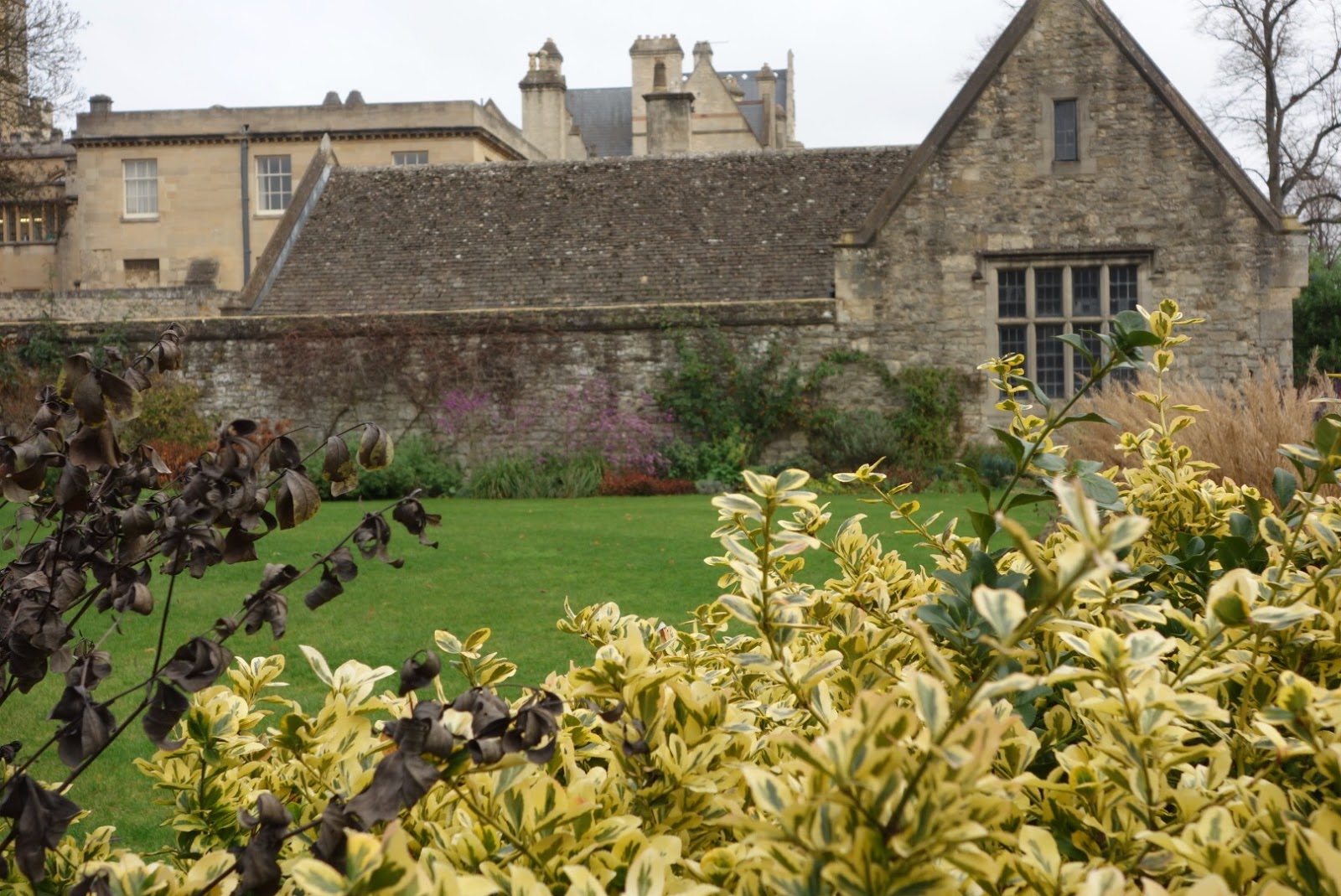


Go!  Explore! Do not confine yourself to London!  In future articles, I’ll take inside the Ashmolean Museum, Blackwell’s Books, famous Oxforions ancient pubs, and more!

Best Way to Discover Oxford:  Hop-On-Hop- Off Bus 30 Pounds pp for 24 hours. Commentary provided in a host of languages.

How to get to Oxford:  We flew into Heathrow, found our way to the airport’s Central Bus Station and bought round trip tickets straight to and from Oxford.  Trip takes about an hour and a half to Oxford’s city center station.  Couldn’t be easier!

Now, to win a bar bet:  What is the oldest continually operating university in the world?
Karueein (859 A.D.), in Fez, Morocco.  And in Europe?  The University of Bologna, Italy (1088 A.D.)

Thursday, August 23, 2018

Stonehenge


Stonehenge

As both my faithful readers know, I’ve written about the ancient history of Britain.  The Celts owned it.  The Romans owned it. The Vikings owned it.  With the successful invasion of William the Conqueror (1066) the French owned it.  That may be a bit of an overstatement, since William (known as William the Bastard by his French foes) was not the King of France, but the powerful Duke of Normandy.  Still, the English court soon spoke nothing but French and the English language still reflects it. Also, those who spoke despairingly of William the Conqueror’s parentage soon lay decomposing in the cold ground.

Ok, good thumbnail  review, yes?  For something more thorough check these blog entries:

But, now let’s move back a few millennium and talk about the rocks on Salisbury Plain., a couple of hours by bus from London. Before even the Celts, another race or ethnicity or other PC vernacular came along, the Neolithic people lived all around the British Isles.  This was some 5000 years ago. Yes, even before your parents were born, kiddies. 

You’re probably mumbling, “Wonderful news for historians and archeologists, but what’s this pile of rocks got to do with me? “ You’re right. Go back to your video games.  For the rest of us, who enjoy mysteries and are fascinated by the world around us, and how the human species evolved, there are plenty of reasons.

Better tell you how Neolithic people fit in.  Stone age right?  Mainly no.  Stone age was the Paleolithic period, some 2.5 million years ago and Homo sapiens was only one of the species of humanoids and the only one that survived into the Neolithic Period.  The Neolithic Period is often called The Cradle of Civilization. Homo Sapiens began cultivating crops and animals.  The groups or tribes began to congregate.  When did this happen?  About 10,500 to 8000 years ago, put nobody can put a date on it.  The Stone Age morphed into the copper age and the bronze age and the iron age, but at different rates around the world, mainly Europe, East Asia, and the Middle East.  Technology was on a roll.  Houses. Pottery.  Metallurgy.  But, the roll was a slow roll.  In many parts of the world, South America and Australia for example, languished in Pre-History (unwritten history) until the arrival of Europeans.  In the case of Australia, there was no written language until the late 18th Century.

Now let’s move on to the world’s most famous circle of rocks, circa 2500 B.C.

Mysteries abound.  Who exactly were these people who built Stonehenge?  Why did they disappear?  How did they live? What’s important about Stonehenge?  With a visit you’ll find some answers, but also discover mysteries that still linger.  The most important mystery is:  Did they drink beer?

You can see the burial mounds and feasting mounds in the distance. 
One of the burial cylinders near the circle of stones.

I called these folks Neolithic, but scientists figure they lived at the cusp between the Stone Age and the bronze age.  These aren’t guesses.  Burial mounds surround the Salisbury Plain, many in sight of the famous stones.  Ancient people left numerous artifacts with their dead.

Archeologists found evidence of what the people ate.
Other spots apparently were used for feasts and celebrations and prove a treasure trove of cooking pots, old animal bones and skins, giving an insight into what the people ate, what clothes they wore and which things were important to them.  But, the ancient people give up their secrets slowly.  Every year the explorers of these remnants are able to tell us more.

What examination of the feasts sites is unable to tell us is if the ancients drank beer.  Well, dang, Honey, you call that a feast?  One thing we do know is that these people were lactose intolerant, but pots that once contained dairy products lead historians to believe milk was used to make milk derivations, such as butter, cheese, and yogurt.  How do they know this?  Caulk it up to microbiological examinations of pots.

Lots of misinformation about Stonehenge. Just one example:  For a hundred years or more, it was thought Stonehenge was a place for Druid ceremonies.  Problem is, the Druids lived in the centuries after the common era (CE or AD), some 2500 years after Stonehenge was built.  Still the idea persists.

How about the arrangement of the stones and where did the stones come from and how did they get where they are?


The construction appears to have taken about 1500 years, beginning with a big circle likely used for ceremonies involving burials.  I’m painting with a broad brush here, folks.  The stones were set in place between 2500 and 1500 BCE/BC.


Based on the types of stones, they came from Wales, some of them were moved over 150 miles.  Two types of stones, bluestones and sandstones.  Hard to see any blue in the bluestones, but I’m told when it rains there’s a blue tint.


As for the arrangement of the stones, archeologists and historians go with the theory that the arrangement is metrological, with the sun at sunrise shining over one stone at dead center and dead center through another stone exactly at the summer and winter solstice.


The summer solstice occurs on 20- 22 June, the longest day of the year, and the winter solstice occurs on 21- 22 December, the shortest day. Variations depend on time zones and where you live in the world.  Here’s a converter:  https://www.timeanddate.com/calendar/seasons.html

Now your know more than 99% of the people who visit this wonderful Pre-history.   Time for a beer!