Showing posts with label Fiction sketch. Show all posts

Saturday, August 14, 2021

His New Novel


His New Novel


Even from a distance, as soon as she walked through the wrought iron, waist high gate and sauntered across the restaurant's crowded patio, he knew she was beautiful, although others might differ, especially those who embraced the petulant faced, waiver thin, cookie cutter blond versions of womanhood.  The male models are not any better.  Thin as washboards, with every look equally dipped in the bucket of petulance.


Why do fashion magazines pick skeletal men and women, with dead eyes and lips so puffy they need to be muzzled?


This woman’s smile of pearly teeth would light up a room, or a patio for that matter, and her Marilyn Monroe curves, which today’s Hollywood would describe as fat, would capture every male eye.  Oh, the gently swaying hips under a peach and white springtime skirt, the billowing white, sleeveless blouse, the sparkling blue eyes, the careless way she sat, and how she lightly crossed her legs and tossed her hair before sipping her flute of champagne.  Come to think of it, he couldn’t see her eyes from where he sat, or the pearly teeth, but it didn’t really matter. Ah, the long, careful fingers that held the stem. Tastefully, elegant red fingernails and toenails on beautifully formed, sandaled feet. He could barely see the sandals or the feet, but his mind swam in a cloudy dream.


No matter her real name, to him she would be Juliane, the star of his budding novel.  Thoughts swirled with the places he’d take her. To the broad streets of Paris, of course, but also London and Brussels and the sun blessed Italian Riviera, with it’s outdoor cafes and white cloth covered tables, delicately chilled white wines that forever live in memory, and bowls of the freshest harvest from the sea, served in large, colorful bowls by white shirted waiters.  And the bread!  On my wonder, the bread, a perfectly, crusty match for butter and wine sauced black mussels.


She would speak English and Italian and French, naturally.  Who could win the favors of such a woman?  Only a spy.  No, not an ordinary spy, but a young, cultured man of wealth who’d been trapped into spying. Yes, that kind of spy.  Hummmm…a man of noble blood and exquisite taste, whose family is torn between cooperation with those they detest and preservation of house and home.


When?  What year?  The war years are most interesting, or the buildup leading to the war years, when the destiny of all of Europe was a guessing game, fueled by whispered conversations in taverns and coffee shops, laced with intrigue that bonds new friends and sly enemies in a chess match of mistrust and survival.


1937.  Perfect.  Franco has set the destiny of Spain in a bloody, terrible conflict that won’t end for another two years.  Only the besieged and starving cities of Madrid and Barcelona are still held by the Republicans.  And, now that Germany and Italy had seen how it’s done, they will probably wade into the depths.  Or will they? Ah, the glory of the indefinite scribe.


His pen inked a page in his black Moleskin notebook, the skeleton of the plot assembled in black ink on the white pages, with pauses to allow his scribbling to catch up with his scurrying thoughts. Then another page and yet another.


Perhaps his novel should be set in the darkness of prewar Paris with optimism fading to despair, amid dangerous thoughts that the huge French army might not prevail, and flanked by France’s desperate hope that the Maginot Line could withstand the onslaught of Germany’s iron fist.


He glanced again at the woman. Was she talking to her companion, an older woman?  No, she was listening. Then why were her lips….oh my god, she’s chewing gum, her jaw so slack, he could almost hear the smacking of her lips. That would not do.  But, he could write that out.  No matter. Still, it disturbed him, causing fissures in his sense of perfection.  The fissures slowly became open cracks. It was as if the Mona Lisa, which the French call la Joconde (the happy one), had been splattered with brown globs of freshly spit chewing tobacco.


No matter.  He’d deal with that later. He continued to write.  The white paper turned a light gray as a cloud passed.  He stole another glance.  She was smoking a cigarette while chewing gum and he saw her in profile. Deep wrinkles that a crow would be proud of on the corner of her eye.  Made him wish he’d ignored her and left well enough alone.  


But, he pressed on, his curiosity a wildcat clawing and hissing.  She had a tattoo on her wrist.  He could just barely make out some guy’s name and something like a protestation of eternal love.  Eternally ugly was more like it.  The tattooist must have been a nervous, one-eyed drunk. Green and red and black ink?  Gauche.  


She was older than he’d imagined.  The cloud drifted and the sun came back to reveal dark roots when she tossed her hair. She shouldn’t toss it.  She should have a little pride and wear a close fitting cap or beret.  Hopefully not a ball cap.


She looked his way as she reached back and scratched well below her hip.  No doubt she would say something vulgar, then belch.


Well, he thought, he could still use her in the novel.  Maybe she could service drunken sailors on the docks at Le Havre.  Maybe she already had. But, she didn’t look French, or well traveled. More likely she’d been fired from a run down coffee shop for being late to work and having dirt under her fingernails. If he used her, it had to be in a minor role to add some color. He’d just have to kill her off in chapter two.


He knew he was being shallow.  She would fit well as Faganella in a new version of Oliver Twisted.


Nope, he wasn’t going to change horses, not after already having scribed fourteen pages in his notebook. He’d stick with Paris, 1937 and make her a Nazi spy.  Vicious.  Uncaring.  Pulling the wings off of flies. He’d change her name to Helga, code name Tart. But, he’d still kill her off.  The mere thought settled him.


He looked around, searching the crowd. Got to be a heroine here.


Wednesday, July 21, 2021

A Sadness of Desire


 A Sadness of Desire


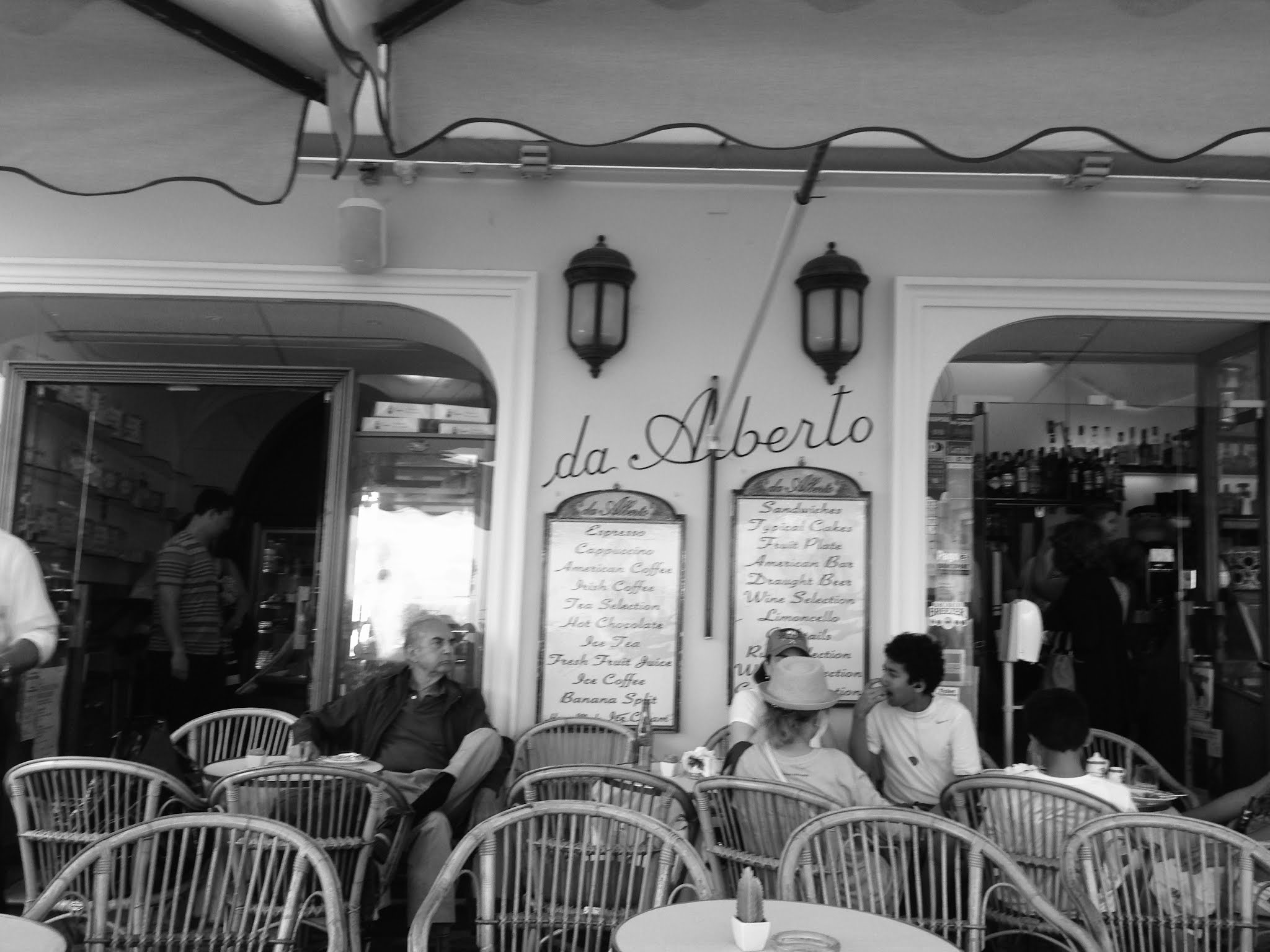
He never wanted it to be this way.  Sad.  Alone.  He sat at an avenue cafe, a table for one, sipping a reasonably pleasant Primitivo.  His creative well, once overflowing and teeming with ideas, had become a deep darkness of soft mud.  He could barely see the bottom.  Didn’t bother to lower the bucket.


“Would signore care for another?”


Would he care for another?  A perplexing question.  Another dose of youth?  A lover who couldn’t get enough of him?  Another idea for a novel?  Or, just another glass of wine?


“Signore?” asked the patient waitress.  The gentleman came in often, every afternoon at four to be exact.  He ordered wine and stared at blank pages of his notebook, gazed at passers by and generally took up space, while other crowded tables buzzed with conversation and laughter.


“Ah….sì, per favore.”  Well, at least that settled that.


Why come here when it took solitude to tease and channel the creative thoughts into submission?  The question had long since ceased to roll in the meadows of his mind.  He came here because this noisy gathering offered a sense of measured order in a disordered life.


The questions and the answers twisted like unruly children, while his pen lay flat on the unopened notebook.  He wasn’t strikingly handsome, but neither was he plain.  The blush of youth had long ago faded into a cloudy, distant memory. 


Three young men passed on the street, smartly dressed, coats falling casually and fashionably off their shoulders in the Italian manner, full heads of dark hair, the thinness of GQ models, smiles as bright and reflective as newly fallen snow.  The waitress smiled back in a shy, yet fully cognitional manner.


“Come with us!” One of the young men yelled out, still flashing his smile, while beckoning with a waving palm.


The waitress spread her arms wide.  Oh the abundance of patrons.  A hopeless situation.


“I’ll be back,” the young man called, “with flowers and wine!”


The waitress laughed demurely in a “We’ll see,” kind of way, but at the same time opening a floodgate of possibilities.


The man at the table picked up his pen and opened the black notebook, filled with blank, unlined pages.  A story passed through his head as though already written.  The story of Vincenzo and Paula wandered in, line by line.  The meeting at the spilling of red wine on Vincenzo’s white slacks that had cost him nearly a week’s wages.  Her dark eyes and the way her black hair spilled over her shoulder, when she leaned toward him with the offer of a red cloth napkin and a basket of soft apologies.

“What is that cologne?” he asked.  


She wore no cologne. Only the fragrance of love, which descended upon him so quickly and carelessly, like a spring bouquet of mountain flowers.


From the table behind the man, a female voice called out.  “David?” which she pronounced in an Italian accent, Da-veed.


The spell was broken.  Vincenzo and Paula disappeared in the smoky vapor of torched ideas.


The voice was familiar.  He turned.  Clara.  His former lover’s friend.  The memories floated back, wrapping him in creative chains.  


Clara, had the air of a know it all, a gossipy woman, ten years his senior, whom he trusted less then an angry boar. Always a quick smile and a brush of her hand on his wrist, as if she longed to have met him before Pané had dragged him into a dreamland of late night adventures, and train rides to the coasts of beauty, and an intro to Italian culture one would never find in a classroom, or even a very naughty book.  It was the Italy of carefree coupling, stays in stone, vineyard-based accommodations, and sleeping until noon, and introductions to more Italians then he could remember.  Pané seemed to know everyone, everywhere. Artists, writers, patrons who clung to their long lost royal heritage.  It was a dream world where David could be himself.  Being himself meant writing profusely.


That all changed, when…well, he need not think of it now.


He had never been remotely attracted to Clara.  Not even in passing.  Not even drunk. Certainly not now. She was one of those women for whom the phony was reality. 


“So, how have you been?”  Clara crooned in Italian.  She had a preconceived sorrowful look of knitted eyebrows, and thin lips, always halfway hopeful she would hear a tearful tale she could repeat to anyone who would listen.


“Have you heard from Pané?” she continued, her smile regaining the advantage.  “You know she’s still with that horrible man.  He treats her so roughly and you were so loving.”


David made a split second decision not to slap her hard enough to stun a bull and impale a picador with his own pica.


“Let’s talk about something more pleasant,” David said, with the underlying promise to snuff out her unbearable life if she didn’t change the subject.


“Perhaps we could meet for a wine? Do you come here often?” Clara breezed on as if the time and date had been sculpted by Michelangelo.


Instead, let’s meet in a more private place, he thought, where I could watch you molested by Jojo, the silver back gorilla, but the words came out so civilly even he was surprised.  “I can’t tomorrow.”  He let the last word drift into a chasm of uncertainty.  “Normally, I don’t come here,” he lied.  “I don't live close.”  He felt safe, knowing she didn’t live here either.


“Where do you live?” She persisted, her dark eyes boring like a drill press.  He was surprised she didn’t lick her lips at the mere thought of scraping up more manure to spread around her gossipy garden.


David glanced at his watch.  “Would love to chat, but…..” another sentence trailed into oblivion. He stood.  “Nice to see you, Clara.”  About as nice as a doctor telling you herpes isn’t fatal.


They kissed on both cheeks. He felt a heavy dose of powder on his lips, but stifled the urge to wipe it off.


God, he had to get back to his apartment!  The vision of Vincenzo and Paula and now her evil, intrusive, psycho mother was tumbling out in whole paragraphs.