Showing posts with label corn. Show all posts

Thursday, March 24, 2016

Mexican Soup – Corn, Chicken, and Chiles


Yes, it's soup, and a thick one.  And yes it does involve Mexican style ingredients, but there are a few American twists.  I don’t grind my own corn with a Molcajete.  I buy the bags of masa, and I used some fresh chile substitutes.   Ya que! (so what)  Olé, Amigo! Put another shot of tequila down your parched throat. Wash it down with an icy Corona.  Now grab a spoon, and if your hunger gnaws like a starving rata, don’t be the last in line!

So what if this soup ain’t ‘xactly comin’ from south of Brownsville.  Damn, it’s good! And good food don’t need no stinkin’ pedigree!

Ok, amigos, let’s git down to it!

The fixins:  (makes about 8 bowls of soup, about 16 cups)

3 green onions, mostly the white parts, sliced in thin rounds
2 smallish red onions, peeled and sliced down the middle (roots intact)
1 large whole jalapeño
1 15 oz jar roasted red bell peppers (or roast 2 of your own!), cut in ½ in strips
1 oz can fire roasted mild green chiles (don’t drain)
12 oz frozen corn kernels, thawed
2 chicken breast halves, each split into thin fillets
6 cups chicken stock (plus a cup or two more for thinning the soup)
3 tablespoons masa, or use fine corn meal
Queso Fresco cheese, crumbled for topping (or another semi-soft mild white cheese)
1 Tablespoon coarse salt, or to taste
Serve with fresh tortilla chips (see below)


In a dry iron skillet (or oven broiler), put the sliced green onions and red onion halves and jalapeño.  Leave them in the pan and turn them until they are charred pretty much all over.  The green onions will char first, so remove them and leave the rest until they are nicely charred.
 
The mixture in the food processor

Put half the thawed corn kernels in a food processor.  Cut the root ends off the red onions and add them to the blender, along with green onions.  Remove the seeds from the charred jalapeño, slice and add it to the blender.  Also add the undrained can of mild, diced green chilies.  Add two cups of chicken stock and blend until smooth.  Put the blended mixture in a large, deep-sided pan.  (Big enough to handle the chicken, more corn, roasted red bell peppers, and at least four more cups of chicken stock!)


Meanwhile, put two cups of chicken stock in a medium sized saucepan.  (When I use commercial chicken stock, I usually add a cube or two of chicken bullion to make it richer.) When the stock boils, put in the chicken filets and cook until tender, about 10-12 minutes.  Remove the chicken filets and use two forks to shred the meat.  Add the stock from the saucepan and the shredded chicken to the soup .  Stir and bring to a boil.  Add the rest of the corn kernels, the sliced red bell peppers, salt, and the final two cups of chicken stock.  Reduce to medium heat and stir.  Cook for another 10 minutes.

Mix the masa into three tablespoons of cold water to make a paste.


Stir the masa paste into the pot of soup and stir until thickened.  If the soup gets too thick, add more chicken stock as needed. Reheat as needed.

Ladle the soup into bowls and dot with bits of Queso Fresco.


To make the fresh tortilla chips:  why would you use Doritos when these are so easy???
1 package corn tortillas, halved and the halves cut into thirds
Heat 2-3 inches of vegetable oil to 350ºF (180ºC)
When the oil is hot, add the cut tortillas in small batches and just cook until the grease barely bubbles.  Take the chips out immediately and put them on a paper towel to drain.
Add salt as desired.


Is your Spanish improving?  Well, down another shot, grab another Corona chaser and get into the spirit of this thing!


Friday, January 10, 2014

Shrimp and Grits - My Way!


Shrimp and grits, my way.  Talk about a Southern low-country culinary tradition!  But, let me explain a few things to un-boggle your so-called mind.  Lots of people who have shivered through snow clogged winters, lived through dust storms on the great plains, and think their football teams can keep up with the teams from the southeast, have no idea what grits are.

First, some basic American history and meaningless trivia.  Native American tribes gifted the early English settlers with corn, or at least that’s how the story goes.

Stick with me….the word grits comes from the old English word, grytt, meaning coarse meal.

Now we get to the difference between cornmeal and grits, and you can stick polenta in there as well.  Grits are corn kernels that have had the husk and germ removed, usually using lye or another alkaline agent, which turns the kernels into hominy.  Looks like a nude kernel of corn that has never seen the sun.  As a matter of fact, grits are sometimes called hominy-grits. 

Now grind the hominy kernels.  In the old days, they used a stone mill for the grinding and you can still find ‘stone ground grits’ today.  Voilá!  You got yerself some grits.  Started out as mostly a breakfast food and I still love ‘em with eggs and sausage.

Flash forward to around 1985 when a New Yawk Times food writer, Craig Claiborne proclaimed the marvel of the sensational shrimp and grits he found at a North Carolina restaurant.  He wrote an article, and being from the Mississippi Delta himself, Mr. Claiborne knew what he was talking about.

A note about Craig Claiborne, who passed away in 2000.  If you want to know about the basics of cooking, don’t go to Julia Child. Pick up any one of Mr. Claiborne’s books. 

http://topics.nytimes.com/top/reference/timestopics/people/c/craig_claiborne/index.html

Claiborne’s article turned into a twelve cylinder, culinary engine that powered grits from the backwoods into the spotlight.  Today, you’ll find shrimp and grits everywhere  from north to south and east to west, from hole-in-the-wall eateries, to the big name restaurants.  Along the way, every major chef in the country has added his two grits worth to the basic recipe.  Barbecue.  Red pepper.  Garlic.  Cheese.  Haven’t seen escargot and grits, but I know it’s coming.

Now, I’m not a purist, but I do like my shrimp and grits to taste like shrimp and grits.  If I wanted to taste barbecue, I’d go to Texas.

So let’s quit messin’ around and git to it!  My recipe is in two parts, as you might guess.  First the grits, then the shrimp.

First the Grits


1 Cup of grits (use the 5 minute variety if that’s all you can scrape up)
2 Cups of milk
2 Cups of water
salt to taste
coarse ground black pepper to taste
1 Stick of butter (using a half stick at a time)

  Note:  Your amounts may vary, depending on the grits you use, but in any case, stick with half water and half milk.

Put the first four ingredients and a half stick of butter in a sauce pan and bring to a boil.  Stir well. The recipe on your box of grits is going to ignore any mention of milk and is going to tell you to bring the water to a boil first, then add the grits.  BUT, I like my grits creamy, especially if I’m going to layer them with shrimp.  The secret to creamy grits is to bring everything to a boil at the same time.  Then, cover and lower the heat to a simmer.  Stir once in awhile until the grits are done.  Your box of grits will give you a pretty good guess at how long that will take.  If the grits become too thick, add a bit more water or milk and when they’re done, stir in the other half stick of butter.

Now the Shrimp


1 lb of large shrimp  (41 to 50 count per pound)
1 ½ Cups of chopped onions (medium chop on all the vegetables)
1 Cup chopped celery
½ Cup chopped bacon
½ Chopped red bell pepper
2 Tablespoons butter for cooking the vegetables
1 to 1 ½ Cups chicken broth
Splash of Worcestershire Sauce
Two pinches red pepper flakes (too much will overpower the flavor of the shrimp)
Salt to taste

¼ Cup butter + ¼ Cup flour, mixed into a paste

Low-medium heat.  Put the vegetables, the bacon, and 2 Tablespoons of butter in a sauté pan.  Cook until the vegetables are soft, but not brown.  Add the spices and shrimp. Stir.  As the shrimp turn pink, add a cup of the broth.  Stir in the flour-butter mixture and allow the mixture to thicken.  Continue to cook on a low temperature for another three minutes.  Add the remainder of the broth as needed to keep the sauce from getting too thick.  You’re looking for a creamy consistency.

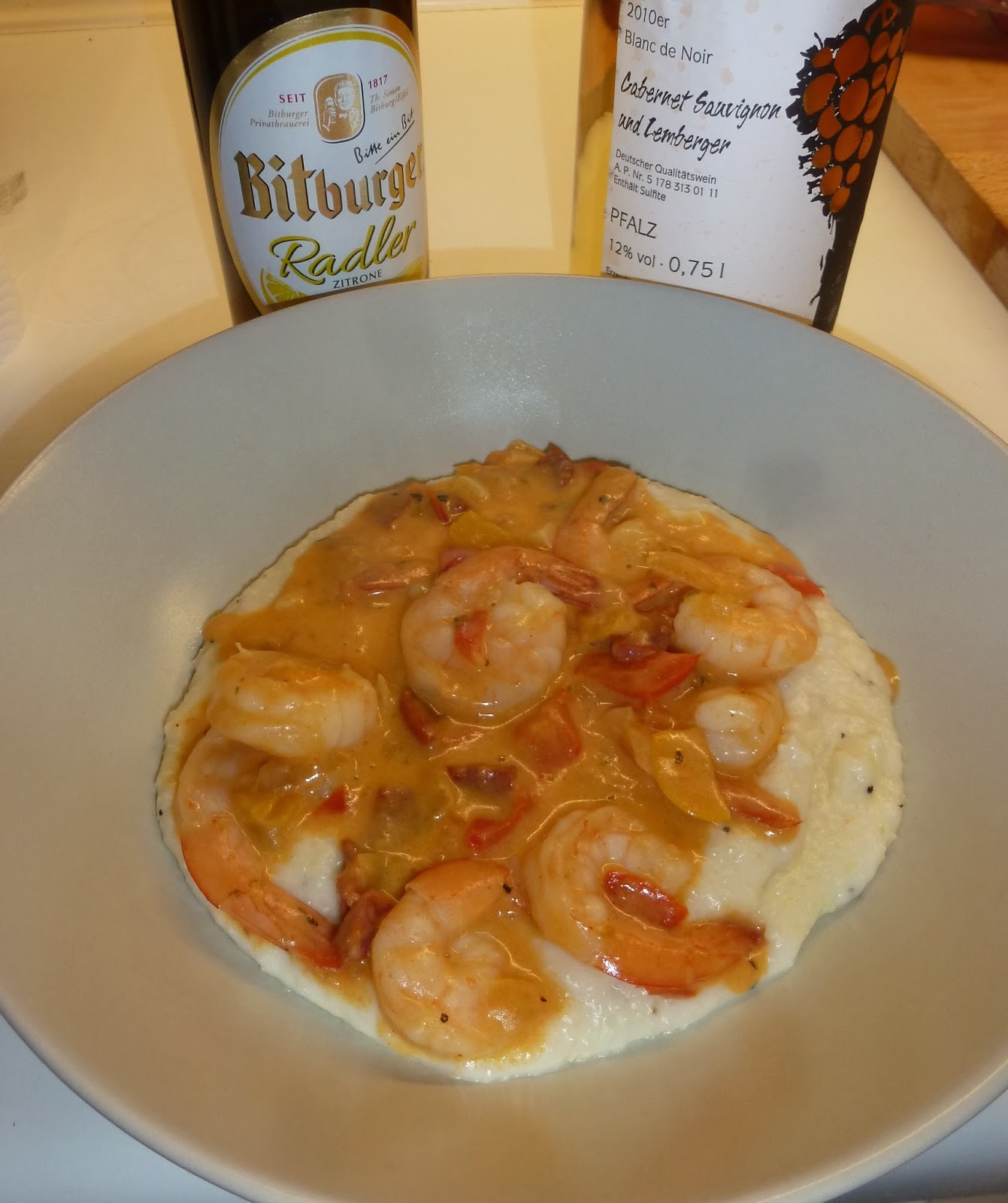
Put a helping of grits in individual shallow bowls and ladle the sauced shrimp on top.  Super for breakfast, lunch, or dinner. 


Enjoy it with your breakfast coffee and juice, or with a light, white wine.


Monday, April 23, 2012

Pozole By Any Other Name


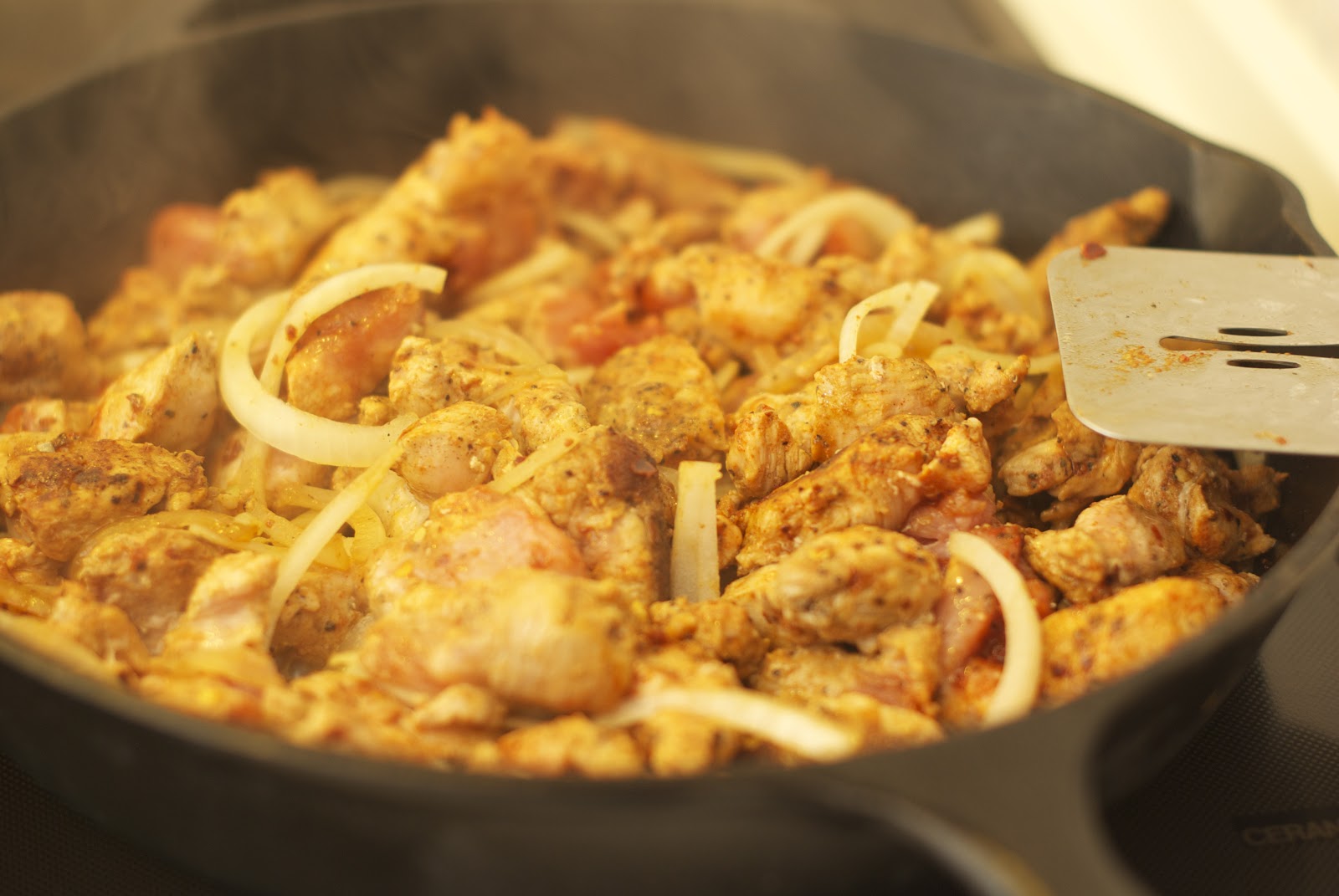
Don't cook the meat too long.  Let the juices collect.

 
Let’s gird our loincloths and travel on a culinary field trip, back through time to Mesoamerica, when men were warriors and virgins got stuffed into active volcanoes.  Think about that.  If you were a virgin, could you think of a way to quickly and pleasantly disqualify yourself for the volcano event in the Mesoamerican Olympics?

Ah, but time to get my mind out of the volcano and back on the pebble-strewn mountain trail to culinary adventure.  Let’s go to Pozole-ville.

Chili ain’t the only meal-in-a-bowl to come roaring out of Mesoamerican culture.  But, if you haven’t heard of pozole (po-zoll-ay), sit down, and pull up a spoon.  You might also want to pull out a pencil, pen, quill, or sharpened stick to jot this down:  pozole is frequently spelled posole,  posolii, or pozolé.  But, anyway you want to scratch it, it’s a combo of corn and meat.

Pozole possibly began (historians can be so circumspect) as a religious holiday dish, with human flesh as the meat ingredient.  Ground corn, in the eyes of the Aztecs, formed the dough from which God made humans, so human flesh and ground corn made an ancient ‘happy-meal’ combo.  The heart was torn out of the victim, with the rest of the meat chopped and mixed with corn and water. It was then served as a communal (communion) feast.  Kinda makes you want to stick with the work-week and skip the holidays, doesn’t it.

Don’t know about you folks, but when people speak about the innocence of the tribes that tomahawked up and down North and South America, call me skeptical.

Eventually, as the Conquistadores brought Catholicism to the tribes and put a stop to profiling virgins, and consuming your loved ones in pots of boiling corn, the ingredients of pozole changed.  Now it’s a nice little dish, easily made, that your family can enjoy without looking around suspiciously, wondering why Aunt Rosy is missing.

I told you the two main ingredients are corn and meat.  There are three varieties of corn, red corn (popcorn), sweet corn, and field corn.  In pozole, we use hominy, which is field corn soaked in slaked lye (lye cut with water) until the hulls come off.  Hominy, by the way is taken from the Powhatan tribe’s word for maize.  Maize, on the other hand, etc, etc.

Making Pozole


1 1/2 pounds ( .75 kilo) pork cut in 1 inch (about 3 cm) cubes.
6 Cups chicken stock  (1.5 litre)
1 Can tomatoes (about 15 oz or 430 gr) undrained
1 Can pinto beans with jalapeños, undrained
2 Cans hominy (drained, but not rinsed)
2 dried California (or similar) chilies
1 onion, chopped
3 cloves garlic, chopped
2 heaping Tablespoons cumin
1 heaping Tablespoon of marjoram (or substitute oregano)
1 heaping Tablespoon smoked paprika
1 teaspoon red pepper flakes
salt
Pepper

Chopped onion, chopped fresh cilantro, and shredded cheese for garnish.

Flour tortillas to accompany.

Preparing the meat:

Mix the pork with 1/2 chopped onion, 3 cloves chopped garlic, cumin, red pepper, paprika, marjoram, salt, pepper.  Fry in a large pan (or fry in small batches) with a little bit of olive oil.  Do not overcook the meat.  It will continue cooking in the broth. After it lightly browns, take the pan off the heat and set it aside.  Juices will collect in the pan and will be added to the broth later.

Preparing the broth:

Step 1: Heat two cups of chicken broth in a small pot, then set aside.   Scorch the dried chilies in a hot frying pan.  Use no oil.  Don’t let the chilies burn, but a few black spots are ok.  Take them out of the pan; snap off the stems, shake out the seeds and let the chilies soak in the hot chicken broth until they are soft, about ten minutes.

Step 2:  Put the soaked chilies and their chicken broth in a blender.  Add the can of tomatoes and blend well.  Meanwhile, heat the remaining four cups of chicken broth in a large pot and add the contents of the blender to it.  Add the remaining 1/2 chopped onion and the cans of pinto beans and hominy.

Putting it all together:  As the broth mixture comes to a boil, add the meat and meat juices that have collected.  Turn down the heat and let the dish simmer for about 30 minutes.

I’ve found it’s better to let the dish simmer for 30 minutes, let it cool and then reheat it.  That further allows the flavors to blend.

Garnish the individual bowls of pozole with chopped onions, chopped cilantro, and shredded cheese.

Makes you feel like a real Mesoamerican warrior, don’t it, or at least want to start your own religion involving pozole and virgins.

Delicious antiquity in a bowl