Monday, May 7, 2012

The Winds of Change


“Hey, bro, do all those tall propellers in that field do any good?”  Much like the chicken and the egg, how many colors in the rainbow, and why does my wife win all the arguments, it’s a question often asked and seldom answered to anyone’s satisfaction.

For the wind turbine part, I’ve got a three-part answer:  current operations,  problems with expansion, and bottom line costs.

Since the early 1990s, the German government has pushed to construct, expand, and modernize its renewable energy program.  Wind power and solar panels jumped to the forefront, and are certainly the most visible.  Right now there are a little under 30,000 of the giant windmills operating, with more on the way.  33,000 more are being installed offshore in the Baltic region.  Overall, wind power fills a bit less than 10% of Germany’s electrical energy needs, but the percentage varies greatly from state to state (http://en.wikipedia.org/wiki/Wind_power_in_Germany), from a little under 50% in northern Germany to almost nil in Berlin.  The Rhineland-Palatinate hits the average squarely on the head at 10%.

Unfortunately, the offshore turbine plan has run into a few snags.  The biggest is the lack of a transport system to successfully integrate all the power produced into the existing grid.  But, you can’t just let the turbines stand in the water and do nothing; you’ve got to keep the blades and hubs moving.  So, right now, it’s taking huge amounts of fossil fuel to keep them turning, leading to the conundrum that in the near future, the offshore fields are using big chunks of energy, not supplying it.  Why construct them offshore at all?  The wind speed at sea is 70 to 100% greater and blows more constantly.

A problem common to both land and sea turbines is the effect of the windmills on birds.  Birds fly into the blades and the towers, or are sucked into the vortex created by the turning of the massive propellers.  The jury is still out on exactly how big a problem it is and a new study (No kidding, a new study? I’m shocked!) is underway.

Wind power is a popular alternative energy source across Europe.  Not just Germany, but practically every country on the continent (and the UK) takes part, however Germany stands in the forefront and is leading the charge into refinement, improvement, and replacement of older, less efficient models.  To give you some idea of the improvements, the older windmills generate about 1.8 megawatts of electricity, or 4,700,000 kilowatt hours.  That’s enough to supply a thousand households.  The newest models generate almost five times that much.

How tall are those darn things, anyway?  Those big beauties, which spike across many German hillsides, range in height from roughly 100 to 300 meters, or 300 to 500 feet.  The blades are a little less than 120 feet long.

A big drawback to wind turbines (and solar panels) is the cost.  The answer is not final, but most reports concede that without government subsidies, wind turbine power is more expensive than other methods of generating electric power.  In other words, without taking money out of the public pocket, turbine power is not cost effective.  But, the figures tend to be jockeyed by the folks reporting the data.   Here’s what the NY Times reported in a 29 March 2009 article:

“A modern coal plant of conventional design, without technology to capture carbon dioxide before it reaches the air, produces at about 7.8 cents a kilowatt-hour; a high-efficiency natural gas plant, 10.6 cents; and a new nuclear reactor, 10.8 cents. A wind plant in a favorable location would cost 9.9 cents per kilowatt hour. But if a utility relied on a great many wind machines, it would need to back them up with conventional generators in places where demand tends to peak on hot summer days with no breeze. That pushes the price up to just over 12 cents, making it more than 50 percent more expensive than a kilowatt-hour for coal.” (http://www.nytimes.com/2009/03/29/business/energy-environment/29renew.html)

Back to the other two questions:  The chicken or the egg.  I don’t know and neither does anyone else, although scientists claim to have a clue.  Colors in the rainbow?  All of them.  Wife winning the argument?  Men are not smart enough to avoid battles they cannot possibly win.

Saturday, May 5, 2012

Rapeseed - Green Fields to Gold


Winter’s flown.  The weather’s warmed.  Days of drizzle and sun thoughtlessly intermingle. The fertile German countryside flickers from brown to green to eye-catching gold. You whisk along the autobahn, or navigate a winding hilltop road and spy great swaths of color spread like yellow silk scarves on green velvet.

In decades past, you’d think of mustard.  But, now it’s rapeseed, mustard’s cousin, that catches your eye in field after golden field.  You only have to glimpse the magnificence of endless squares of bright yellow to understand why I chose to forego my usual preoccupations with wine, women, and fifty-dollar lunches to scribble about cooking oil.

Cooking oil, in the form of rapeseed (rapsöl in German), is a huge cash crop, not only in Germany, but across the globe. Back in the 1950’s only a few thousand tons were produced, but now the number has raced into the millions of tons.  Germany ranks about number five.  Why do I say ‘about number five” instead of just number-flipping-five?  Because, like college football rankings, commodity rankings vary according to whose poll you’re idly reading, over your second cup of coffee.  You don’t look at commodity polls? You ignorant serf!  Anyway, China is so far out in front, it really doesn’t matter who the top ten are, except to say the U.S. ain’t one of them.

But you do find rapeseed oil in abundance in every American super market, marketed under the name Canola Oil.

Why the sudden rise of rapeseed production. Lots of reasons, the biggest being that scientists figured out a way to grow rapeseed low in erucic acid, which incidentally is mildly toxic to humans, in addition to being hard to pronounce and impossible to remember.  There’s another thing that makes German rapeseed oil different.  The European Union has strict agricultural rules, including the banning of genetically modified crops.

With elimination of the erucic acid problem, rapeseed moved out of the “good for soap and lamp oil” category and into the universally celebrated, heath conscious “high in omega 6 and 3” spotlight.  The crop’s popularity suddenly blossomed (so to speak), with new uses found every day.  Besides cooking oil, the stalky rapeseed plant provides a high protein animal feed and even bio-diesel fuel.

So, the next time you slide the top back, put that cute thing (and by cute thing, I mean anyone with breasts who doesn’t bark) on the seat beside you, and race along a winding hilltop road toward that fifty-dollar lunch, gaze across the rolling countryside.  See those patches of gold?  Just like your cute thing, those golden fields, rapturously swaying in the gentle breeze, are not just beautiful to look at, but really, really useful in a variety of ways.

Tuesday, May 1, 2012

Back to Mannheim. Back to the Past. Mannheim’s Technomuseum

Technomuseum 

The water tower on Friedrichsplatz 

Spargel Soup


Aston Martin DB9

Our view over lunch.


Take an only-slightly chilly April Saturday morning, hop a train to Mannheim and walk into a world of interactive technology.  Mannheim’s Technomuseum is not only a step back in time, but also a step back into what technology really is.  The inquisitive human mind at work.

Today, when we hear the word technology, computer chips, cell phones, and the latest electric car snap to mind.  We sometimes forget that even the more simple machines and implements we’ve come to take for granted followed the same human processes of thought, wonder, action and improvement.  Cars, cameras, motorcycles, even razor blades didn’t come from nowhere.  Someone saw a need, someone had a burning desire to examine a simple task more closely and find a better way.

Did you know the Wright brothers built their own simple wind tunnel?  They had nothing but need and desire to guide them.  There were no aeronautical tables and graphs.  And the Wright brothers weren’t the only ones to solve the intricacies of manned flight.  In the Technomuseum, there are hundreds of inter-active displays to let you understand the flow of air over a wing, to let you experiment with what makes a light bulb glow.  You can do a dozen other things.  Let static electricity stand your hair on end.  Take a short ride on a steam driven train and see what travel was like in a first class compartment, when wooden benches were a luxury.  Imagine what it was like to travel 4th Class!  You can see paper made and a printing press in action, marvel at how workers toiled in a knitting mill, and see first hand the development of the automotive industry, including a modern production line.  Kids of any age, from 1 to 90 are not excluded.

Then, of course, it’s time for lunch.  Fortunately, the sun had made an appearance, the sweaters came off and hunger reared its head. And where would you effortlessly find a lovely spot? The Friedrichsplatz, an art nouveau park, punctuated by the famous Mannheim water tower.  Flowers abound, fountains arise, lovers hold hands, and normal people search for a quaint café.  Stores and restaurants surround the open square and we found a dandy in The Onyx. (http://www.onyx-mannheim.de/)  It’s spargel season. We began with white asparagus soup, followed by salad, a curried vegetable medley, and red snapper, all topped off with a local brew.

I have never made spargel soup, but I plan to try before 24 June, the birthday of John the Baptist and the unofficial end of spargel season.  Here’s the recipe I’ll start with:

Ah, living in Europe is so stressful, racing from one idyllic spot to another.

Meanwhile, we chatted and gazed out at one of the most beautiful parks in any city in Germany.  Parked a few feet away was an Aston Martin DB9, listed in the $200,000 range.  We were in good company and suddenly a fifty dollar lunch seemed more than reasonable.

Saturday, April 28, 2012

Easy Sunday Morning Jazz


Recorded in 1955, this version of Deep Purple is timeless. With Art Tatum on piano, accompanied by Lionel Hampton, Harry Edison, Buddy Rich, Red Callender and Barney Kessel, for my money this is jazz at the pinnacle of soft, lyrical improvisation. Sweet, sweet sounds that live in your soul and carry you to new heights.


Deep Purple, written by pianist Peter DeRose, was first published as a piano composition in 1933.  Words weren't added until 1938.  After that it took off as one of the biggest of the big band hits, even lasting in various versions through the beginning of the rock and roll era.

The words sink in deep and fill your heart.  It's love with an almost unbearable pain...


When the deep purple falls over sleepy garden walls
And the stars begin to twinkle in the sky—
In the mist of a memory you wander back to me
Breathing my name with a sigh...


Wednesday, April 25, 2012

No Stir, That's My Cobbler


Just pour the batter into the butter, then add the blueberries.


Cobblers, laced with fruit, and crusty with risen dough, are some of my favorite desserts. Among these, blueberry cobbler sits at the top.  Sweet and bursting with plump berries…, my taste buds are doing back flips just thinking about it.

A little bit about blueberries.  The blueberry bush is a native-American plant.  Didn’t reach Europe until the 1930’s.  But now it seems, blueberries are noted for desserts and jams all over the globe.  German grocery shelves are filled with a selection of blueberry jams.  Also, the health industry lauds blueberries for their dietary benefits.  I’ll leave more of that to you and Google.

Most U.S. commercially grown blueberries come from Maine, but even when I lived in the southern U.S., there were pick-your-own blueberry farms.  Great fun and far less expensive than buying them in a store.  Our family used to pick enough to freeze bags of them, which I found out, doesn’t hurt the color, flavor, or round plumpness.

Let’s get to the recipe, which is soooooo simple, you’re going to have to control your urge to do more.  Read the whole recipe, including the notes, to ensure you get the dessert that will have your loved ones, or even your family raving for more.

One note of caution:  Make substitutions at your own risk.  If you throw together a gluten-free, artificially sweetened, non-butter cobbler, you’re on your own in a nasty and brutish culinary wilderness.  And, no one, not even your now-disgusted friends, are going to save you.

Blueberry Cobbler


Preheat oven to 350ºF (180ºC)

1 stick butter (114 gm)
1 Cup flour  (128 gm)
1 Cup sugar (200 gm)
2 teaspoons baking powder  (approx 11 gm)
1/2 teaspoon salt (3 gm)
1 Cup milk (.25 liters)
2 1/2 Cups fresh blueberries, or one 12 oz package of frozen blueberries (see baking note below) mixed with 1/4 cup sugar

Melt the butter in a medium sized, deep-sided baking dish that holds at least 6-8 Cups.

Mix the flour, sugar, baking powder, and salt together in a bowl.  Add the milk  to the dry ingredients and mix well to make a mildly thick, but liquid batter.

Pour the batter into the baking dish containing the melted butter.  DO NOT STIR, just pour it in. 

Pour in the sugared blueberries on top of the batter.  DO NOT STIR.

Bake at 350ºF (180ºC) for 1 hour.  Crust will rise to the top as the cobbler bakes.

Voilà!

Baking Notes:  1) If you are using frozen blueberries, increase the baking time to 1 hour and 15 minutes.  2) This is a very sweet and juicy dessert.  If you want it less sweet, do not mix sugar with the berries.  If you want it more cake-like, mix the batter using 3/4 cup of milk.

Besides the taste, why is this one of my favorite desserts to serve to guests?  You can put it together in a flash (before you serve the main course) and go back to your guests while it bakes.  Using only two mixing bowls and one stirring spoon (only for the batter!) it’s a very quick cleanup.  I often serve it with vanilla ice cream, for a hot/cold combination that’s a wonderful dessert choice year around.

Tuesday, April 24, 2012

What Is A Weinfest Anyway?


For my friends who have NOT had the pleasure of  a weinfest, let me explain in photos...

First you find a nice quiet river, like the Mosel...

Add to that a medieval town, little changed in hundreds of years...

Then add a band or six to make it a parade...

block off the streets, for the crowds to drink and drift..

Sell some pretzels

...gather lots to eat...

...including roast meats ...spießbraten

...Lots to drink

...more happy paraders

balloons for the kids

...just one more way to say I love you!

...young and old, in costumes and not

...what's a festival without a queen?

...the parade goes on and on...

...but in the end, it's all about the grapes.

These grapes

...and of course, the wine...

...Until the day drifts harmlessly into evening...


Monday, April 23, 2012

Pozole By Any Other Name


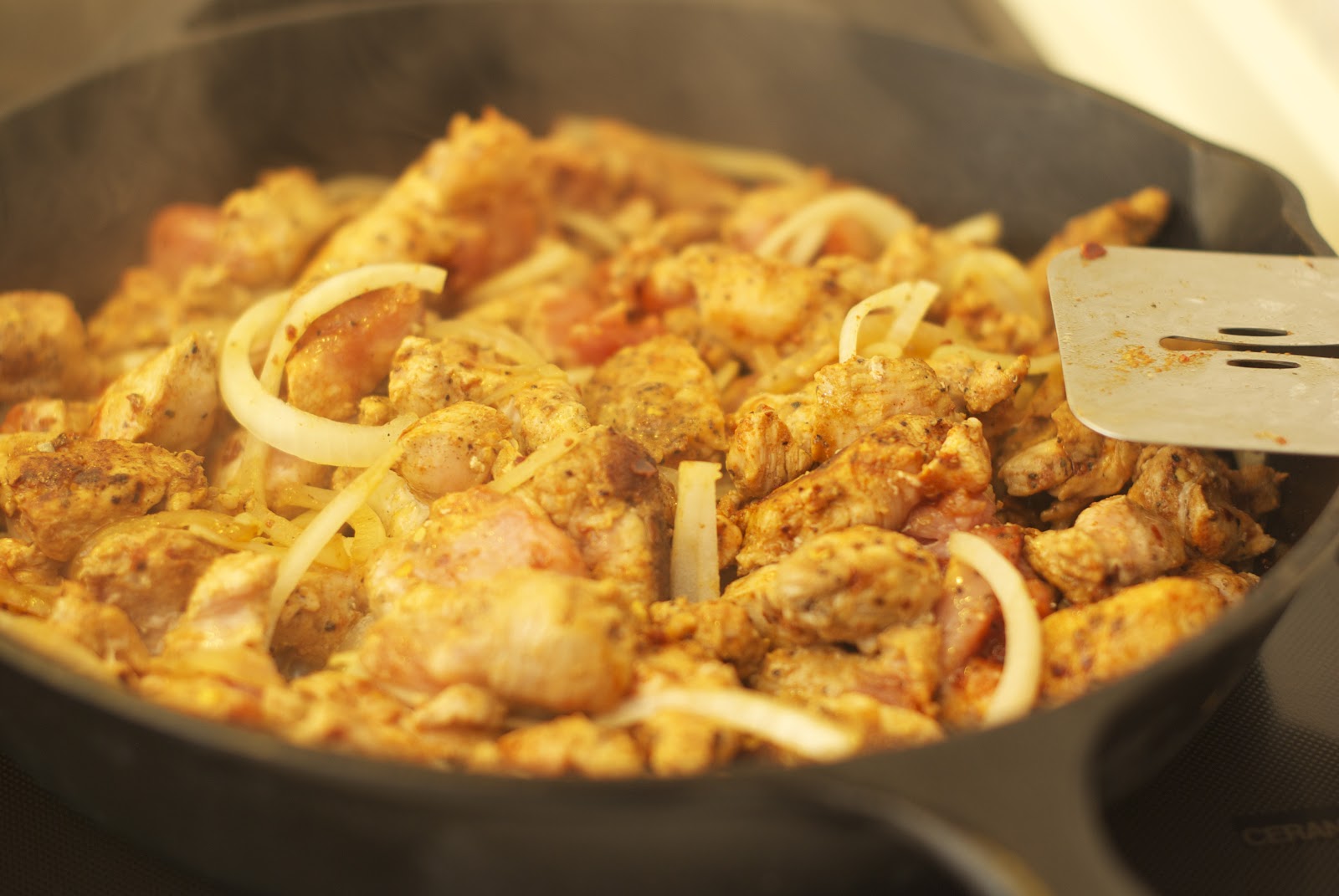
Don't cook the meat too long.  Let the juices collect.

 
Let’s gird our loincloths and travel on a culinary field trip, back through time to Mesoamerica, when men were warriors and virgins got stuffed into active volcanoes.  Think about that.  If you were a virgin, could you think of a way to quickly and pleasantly disqualify yourself for the volcano event in the Mesoamerican Olympics?

Ah, but time to get my mind out of the volcano and back on the pebble-strewn mountain trail to culinary adventure.  Let’s go to Pozole-ville.

Chili ain’t the only meal-in-a-bowl to come roaring out of Mesoamerican culture.  But, if you haven’t heard of pozole (po-zoll-ay), sit down, and pull up a spoon.  You might also want to pull out a pencil, pen, quill, or sharpened stick to jot this down:  pozole is frequently spelled posole,  posolii, or pozolé.  But, anyway you want to scratch it, it’s a combo of corn and meat.

Pozole possibly began (historians can be so circumspect) as a religious holiday dish, with human flesh as the meat ingredient.  Ground corn, in the eyes of the Aztecs, formed the dough from which God made humans, so human flesh and ground corn made an ancient ‘happy-meal’ combo.  The heart was torn out of the victim, with the rest of the meat chopped and mixed with corn and water. It was then served as a communal (communion) feast.  Kinda makes you want to stick with the work-week and skip the holidays, doesn’t it.

Don’t know about you folks, but when people speak about the innocence of the tribes that tomahawked up and down North and South America, call me skeptical.

Eventually, as the Conquistadores brought Catholicism to the tribes and put a stop to profiling virgins, and consuming your loved ones in pots of boiling corn, the ingredients of pozole changed.  Now it’s a nice little dish, easily made, that your family can enjoy without looking around suspiciously, wondering why Aunt Rosy is missing.

I told you the two main ingredients are corn and meat.  There are three varieties of corn, red corn (popcorn), sweet corn, and field corn.  In pozole, we use hominy, which is field corn soaked in slaked lye (lye cut with water) until the hulls come off.  Hominy, by the way is taken from the Powhatan tribe’s word for maize.  Maize, on the other hand, etc, etc.

Making Pozole


1 1/2 pounds ( .75 kilo) pork cut in 1 inch (about 3 cm) cubes.
6 Cups chicken stock  (1.5 litre)
1 Can tomatoes (about 15 oz or 430 gr) undrained
1 Can pinto beans with jalapeños, undrained
2 Cans hominy (drained, but not rinsed)
2 dried California (or similar) chilies
1 onion, chopped
3 cloves garlic, chopped
2 heaping Tablespoons cumin
1 heaping Tablespoon of marjoram (or substitute oregano)
1 heaping Tablespoon smoked paprika
1 teaspoon red pepper flakes
salt
Pepper

Chopped onion, chopped fresh cilantro, and shredded cheese for garnish.

Flour tortillas to accompany.

Preparing the meat:

Mix the pork with 1/2 chopped onion, 3 cloves chopped garlic, cumin, red pepper, paprika, marjoram, salt, pepper.  Fry in a large pan (or fry in small batches) with a little bit of olive oil.  Do not overcook the meat.  It will continue cooking in the broth. After it lightly browns, take the pan off the heat and set it aside.  Juices will collect in the pan and will be added to the broth later.

Preparing the broth:

Step 1: Heat two cups of chicken broth in a small pot, then set aside.   Scorch the dried chilies in a hot frying pan.  Use no oil.  Don’t let the chilies burn, but a few black spots are ok.  Take them out of the pan; snap off the stems, shake out the seeds and let the chilies soak in the hot chicken broth until they are soft, about ten minutes.

Step 2:  Put the soaked chilies and their chicken broth in a blender.  Add the can of tomatoes and blend well.  Meanwhile, heat the remaining four cups of chicken broth in a large pot and add the contents of the blender to it.  Add the remaining 1/2 chopped onion and the cans of pinto beans and hominy.

Putting it all together:  As the broth mixture comes to a boil, add the meat and meat juices that have collected.  Turn down the heat and let the dish simmer for about 30 minutes.

I’ve found it’s better to let the dish simmer for 30 minutes, let it cool and then reheat it.  That further allows the flavors to blend.

Garnish the individual bowls of pozole with chopped onions, chopped cilantro, and shredded cheese.

Makes you feel like a real Mesoamerican warrior, don’t it, or at least want to start your own religion involving pozole and virgins.

Delicious antiquity in a bowl