Showing posts with label Castle. Show all posts

Tuesday, February 24, 2015

Le Schlossberg Restaurant - Ahhhh French Cuisine!


So, you foolishly think I confine myself to England?  Mas non, mesdames et messieurs!  Certainement pas!

I stray across other borders, into small towns, wine caves, fine restaurants, and as long as the money holds out and my trousers fit, I will continue to consume fine potables and nosh at tables that require no rush, and no qualitative guessing.

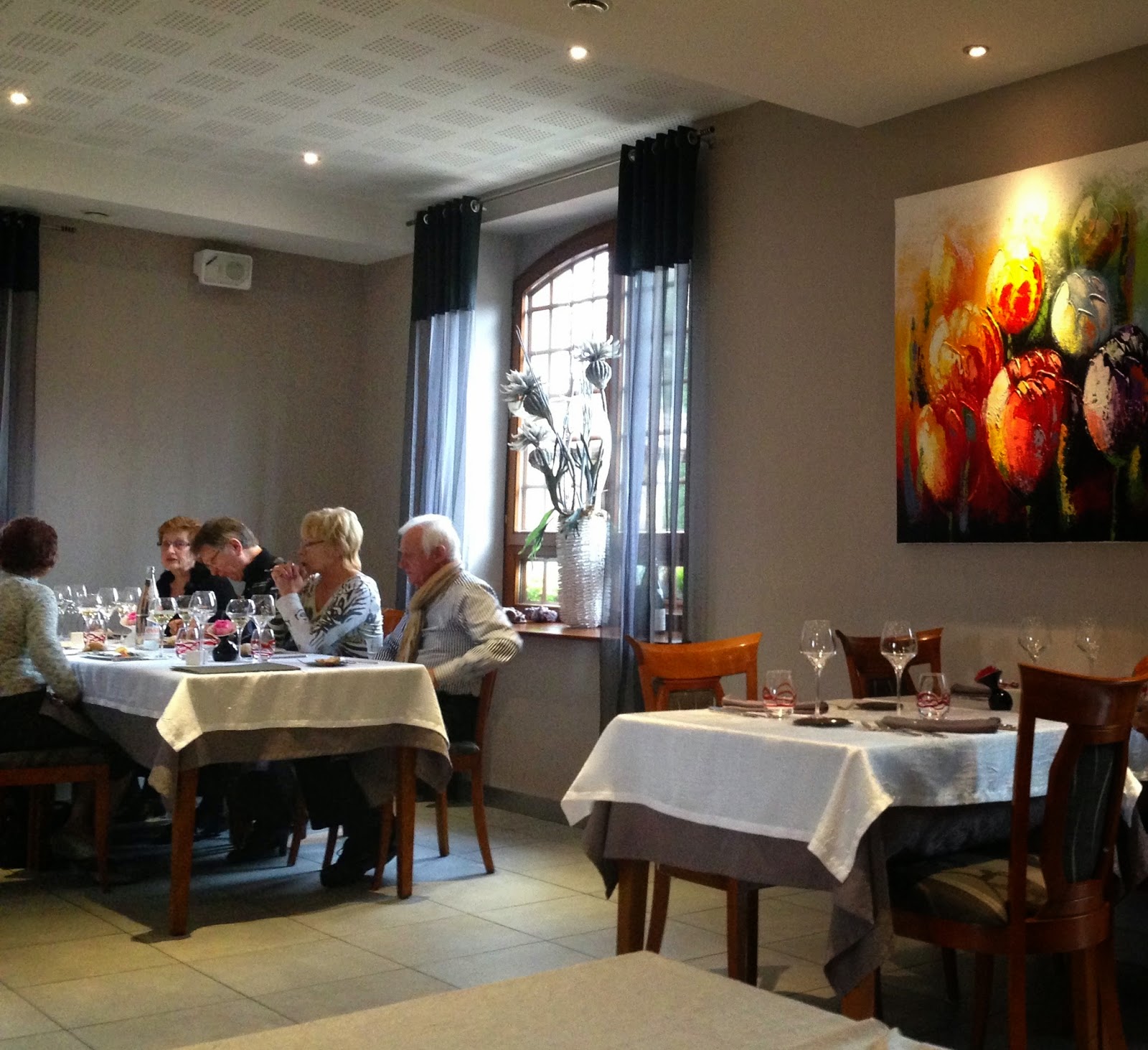
Just last weekend, my current girlfriend, who keeps referring to herself as my wife, and I visited Le Schlossberg Restaurant in Forbach, Alsace, France.

As the name implies, the restaurant shares a space up on a hill, in the castle in the center of Forbach.  The castle itself dates to somewhere in the 11th or 12th centuries, although wars and whatnot have led to considerable rebuilding.  The grounds are part of an expansive park, with rolling green slopes and slender trees that set the castle apart from the town and allow for a quiet, and restful repast, divorced from the traffic below.


We stumbled on the restaurant perhaps a year ago, a wrong turn, a fortuitous find.  It was closed at the time, but we always meant to go back.   Our first attempted return foolishly involved inviting friends to join us, and when that didn’t work out, we cancelled.  (We also crossed the so-called friends off our Christmas Card List, and left an anonymous tip on the drug abuse hotline.)

Months passed.  Maybe a year.  Who knows when you wash down a bottle of wine each night?  Well, maybe a fourth of a bottle.  I’m always aided by my ever-eager-to-help family.

Then one Saturday, I woke up fairly early, which is to say well before cocktail hour.  The sun was not shining.  After all, this is Germany.  But, it was not raining, or snowing, nor was there enough road construction to stop a determined column of Panzers.

You’ve heard of German efficiency?  Don’t believe everything you hear.  Stretches of major highways are sometimes down to one lane for months, or even years.  The famed speed limit-less autobahns slow to what you might find in Los Angeles during a riot, without the accompanying gunfire.

The road to Forbach, France lay open, clear, and without stagnation.  I’d been studying French and had that innocent swagger of confidence.  Bonjour, merci, au revoir rolling fluidly off my silvered tongue.

I always say the French can teach anyone how to eat.  No matter if you drop into a rowdy neighborhood bistro, or op for the elegance that comes with Michelin Stars, you’ll soon wonder how food can taste this good, or be presented so artfully.


 Bonjour! I said happily to the lovely woman who greeted us at the door. Deux personnes, s’il vous plaîtNo matter what, in France the first word out of your mouth must be Bonjour.

Always best to let the locals know with whom they’re dealing.  They soon found out.  French flew back at me like the sting of ricocheting shotgun pellets.  When under attack, stutter and stammer, or in my case, smile like an idiot and nod.  The waitress saw my problem, but treated me gently.  German? She inquired.  English? I countered.  She shook her head, as if to say, Messieur, this is a respectable restaurant.  I smiled as sheepishly as a schoolgirl being asked to her first ménage a tois.  German it is!  But, I also reserved the right to ravage the French language to the best of my ability.

French cuisine is frequently held as the gold standard and I’m often asked, “What’s different about French cooking?”

It’s been said, the three secrets to French cooking are butter, butter, and butter.

I have a different take.  My answer comes in just a few words:  Time.  Attention to Detail. Freshness.

Time:  Good cooking cannot be hurried and that means: neither cooked rapidly, nor prepared ahead.  Every sauce is strained and tasted time and time again, until the ingredients meld and the satin creaminess brings out the best of the dish.

Attention to Detail:  Every texture, flavor, and color is important to the French chef.  Every vegetable is prepared exactly, from peeling, to cutting, to cooking.  It’s arranged on the plate exactly, and cooked to bring forth both taste and aroma.  Meats ,fish, and vegetables will never be overcooked.  Even a ragout, in which the meat literally falls apart, is cooked to exactly the right point so that flavor is not lost.  Another part of detail is providing a blend of flavors and textures that tease and please the palate.  

Freshness:  A can has never seen a French kitchen.  As one French housewife put it, “I do not buy vegetables that do not have dirt on them.”  Fish never smell fishy because, freshwater or sea, they go from swimming to the pan. Breads and rolls are crusty outside, warm and soft inside.

French cooking may fool you into thinking you’re not going to get enough to eat.  Small to tiny portions dominate, but after several courses, unless your stomach was a donor organ from an NFL lineman, you’ll come away pleasantly pleased and politely satisfied.

A French meal is to be relished, discussed over wine, compared to delightful things in heaven and on earth.  A time of dining and conversation. Better than sex?  No, for the French, one is merely a continuation of the other.


Rather than ramble on, with the address, hours and other restaurant details you can quickly find on Le Schlossberg’s web site, just feast your eyes on photos from the best lunch I’ve had in a long time.   


Even the table setting sports an elegance.

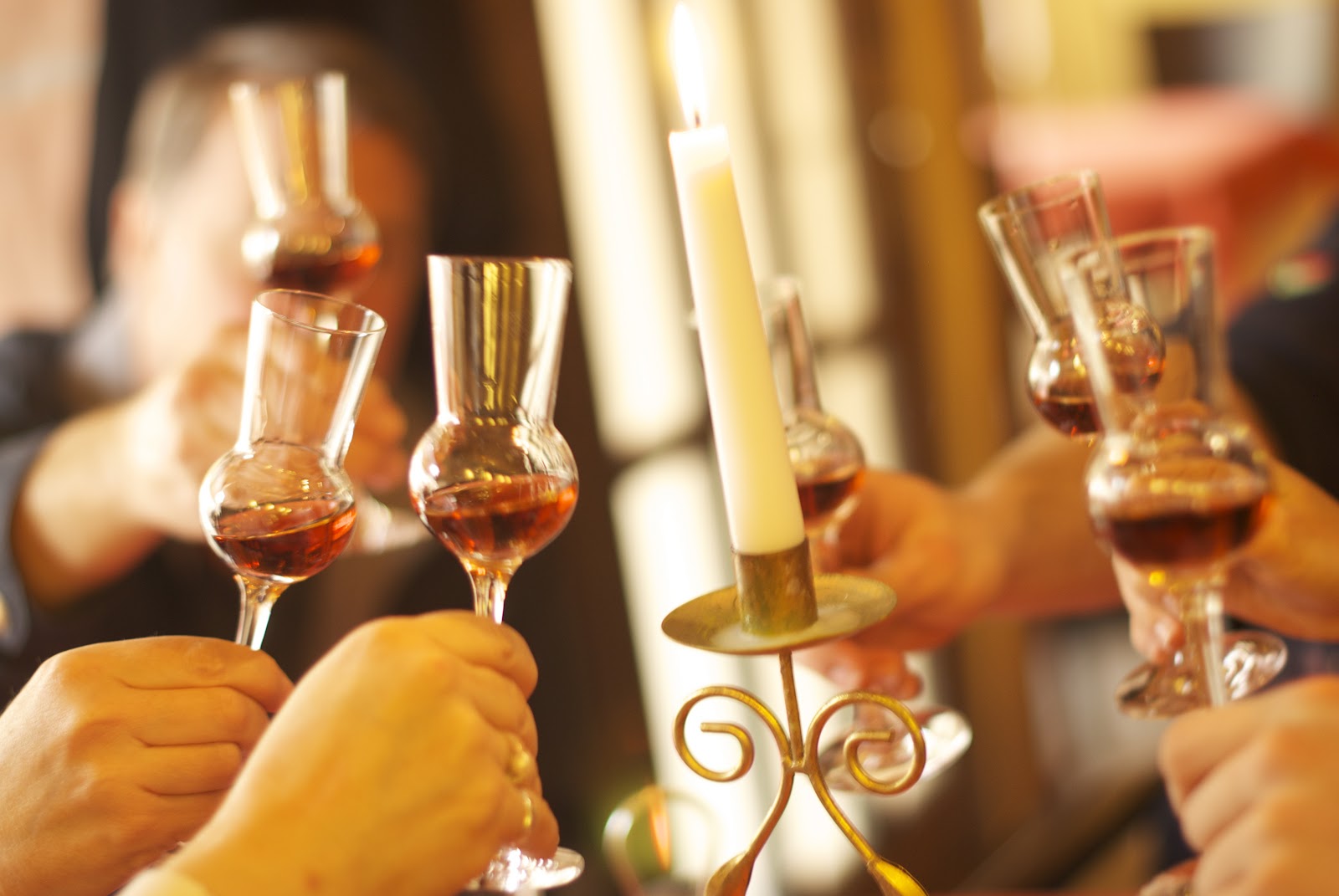
A bit of red vermouth as an aperitif.

An appetizer. From the left, dots of reduced balsamic vinegar, a broccoli compote, a red bell pepper compote.


The first course.  From the left, pear sorbet, stacked silky paté, coarse paté, the compote of figs

Velouté, one of the five classical French sauces.  This one is fish, with mussels, shrimp and thin sliced broccoli.

A main course.  scalloped potato tart, dimples of potato mashed with spinach, a row of sweetened red cabbage and finally, veal "in its skin," which is actually a Wellington style crust.

Dorada fish (bream).  Note the tiny vegetables around a scoop of creamy saffron rice.

A cheese plate to finish.  Green grapes, Chève cheese, Brie, Tomme, and Brouère. The first and third are goat cheeses.

Elegance even with the resting crystal.


Wednesday, June 19, 2013

Storming the Castle: just another summer's day

Be sure to scroll down for more photos and enlightenment


Burg Lichtenberg is a cozy little castle, high on a hill overlooking the city of Kusel.  Don’t worry if you haven’t seen it yet.  It’ been standing guard over the valley since 1200 and is not likely to disappear soon.

The neat thing about Lichtenberg is that it’s useful, which is more than you can say for most things built in 1200.  From spring through fall there are festivals.  Also a restaurant.  Also a youth hostel.  No end to the possibilities.

Last weekend was an herb fest, complete with garden ornaments, plants for sale, the obligatory beer and wurst, plus guided herb tours around the castle walls and an explanatory visit to the castle’s own herb garden.

I forget to mention the three-piece band, with middle aged musicians playing and singing John Denver favorites in German and English. Henry John Deutschendorf, Jr. ( his real name) translates well, or at least the emotions do.  Everyone can understand the yearning to go home to West by-god Virginia, or Rocky Mountain High…speaking of herbs.

I learned a few things during the semi-walk around the castle walls.  Camille tea comes from little, white, daisy-like flowers, which I would have known had I paid more attention to the picture on the packaging.  Supposedly, you can also brew a strong batch and use it to heal skin ailments.  I recommend letting it cool first, but hey, you’re your own boss.

The lady who led us around was the college professor who knew too much for our own good.  Apparently, leaving any tidbit out would have been a sin against all of academia.  My mind started to drift when two herbs took the first thirty minutes.  I started to chew weeds and paw the ground. We’d traveled ten meters and it was a loooooog way around the castle walls.  I regretted my lackey hadn’t brought a tent and provisions.  Plus, the soliloquy was in German, so I could only catch every other word:  good, tea, good again, etc.  I yearned for the Cliff Notes.  Time to break ranks and sprint for beer.  Got to the beer stand and put the golden-coldie to my lips just in time.

Next weekend is a much bigger, Medieval Festival, with even more food booths, knights in armor, complete with squires and horses, sword fights, and winsome ladies in flowing gowns.  Beer.  Wurst.  Sunshine.

If you miss that one (and why on earth should you?), I’m sure there are others coming up.  But, if they offer a tour around the castle walls, drag a keg with you.


Saturday, June 30, 2012

Not Evil, Medieval – All’s Fair at the Fair

Lichtenberg


Leather mask, handmade, hand painted

Entry to the castle


"Spinning wheels got to go 'round..."


I know the question that’s burning in your soul.  You there. Yeah, you, the one waving your hand like a battle flag.  What does medieval mean???

Medieval is usually spoken of (in polite society, e.g. those that don’t still eat with their hands and throw bones at the yapping dogs) as the time between antiquity and the Renaissance. So put the years between the fall of Rome and when the lights came back on, from about 476 A.D and the fall of Constantinople in 1453.  There was no light switch.  More like a lingering sunrise that took a couple of hundred years.

But, we usually don’t think of the Middle Ages that way.  We picture knights, fair ladies, jousting, feasts, colorful tents. We overlook lords and serfs, a complete lack of physical hygiene, rotting teeth, women’s bodies worn out from having a score of babies, and death by the age of 45.  Hollywood does wonderful things to reality.

Camelot!  Hey, that’s the ticket.  Utopia, mostly, except for evil knights, etc.  Ok, let’s go with Utopia, the quest for the Holy Grail and stuff like that.  We’re talking gooooood times.

I went to a place like that on Saturday at the 6th annual Medieval Market at the Lichtenberg Market near Kusel.  (Burgstraße 12, 66871 Thallichtenberg).  Lots of lords, ladies, colorful tents, great food and a host of ancient handicrafts.  Friendly crowds.  In short, the Middle Ages, as they should have been.  Jugglers.  Sword fighting.  Blacksmithing.  Leather crafts.  Shoes with turned up toes.  Damsels in long dresses, with pretty smiles and braided hair.

This market is gone until next year, but look around and ask at any tourist office and you’ll be steered to another Camelot.  Well worth the drive, for the pageantry, a view from a castle, seeing friendly force of arms, and best of all a belly full of handmade sausages and old-fashioned mugs of ale.


Pizza - a medieval favorite...


Farewell to the Fair

Monday, March 12, 2012

Saarburg A Quaint Little Venice

Saarburg and the castle

Little Venice

restaurants and shops in the heart of old town


the gorge and mill wheels

gotta have some weizenbier, wheat beer

rahm schnitzel

marsala wine - perfect ending

Old Bell Foundry

inside the foundry

view from the castle

What can you say about Saarburg without mentioning quaint, beautiful, interesting, old, ancient, castle, church, food, waterfall, gorge, and historic?  Turns out there’s a lot.
For one thing, Saarburg is sometimes called the little Venice.  Nope, no gondolas staffed by Italian gentlemen carrying poles and wearing funny hats.  But, the old town center is remarkable.  Beautifully arched bridges span the man-made tributary of the Saar River, diverted to power an old mill.  The mill ground many things, most notably grain until recently, when it was turned into a museum.  The water still flows, however, and the mill wheels still turn lazily.  Amble through town.  Take your time. Restaurants spread delightfully into the main plaza. Sip a beer or wine at an outdoor café, right next to a deep gorge and cascading stream.
You have to leave the heart of the town and stroll down a narrow cobblestone lane to find it, but don’t miss the old bell foundry that produced church bells for centuries, in fact until 2002.  As you walk, note the centuries-old, colorful fishermen’s homes on either side.  Coming out of the city proper, and after passing through another small plaza, you’ll see the foundry museum.  Some of the bells on display weight upwards of two and a half tons! Every wonder how bells were cast, or how church bells are consecrationed?  You’ve got your chance. The bell company still produces resonant tones from iron and brass, but in a more modern environment.
Saarburg is one of those jewel towns you can’t wait to take your friends to, so pick your friends carefully. The view from the castle is remarkable. Count Siegfried of Luxemburg, built the castle site in 964 and parts of the original works remain.  Take the winding stairs to the top for a splendid view of the Saar.
            Saarburg is what I call ‘low pressure’ touring.  Leisurely train ride.  Slow paced, quaint village.  Interesting museums you’ve never thought of.  Learning things you never knew you wanted to know.  In short, a delightful day with friends.