Tuesday, April 16, 2019

Bari, Italy


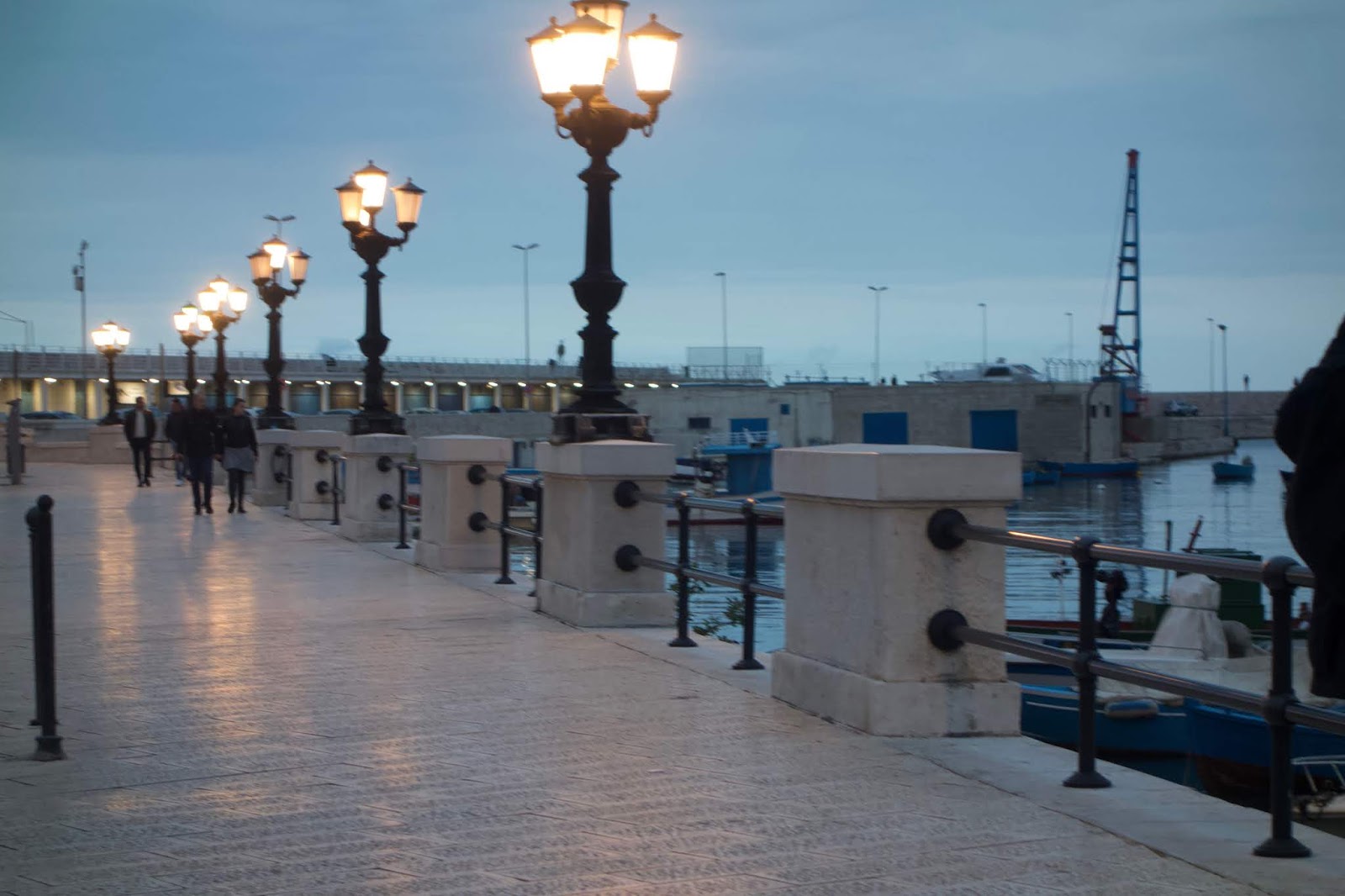
Bari, Puglia, Italy

Of course, one must visit the Italian usuals, Rome, Venice, Florence, Pisa, the Vatican. Vatican City, although surrounded by Rome, is not Italy, but it’s own country.  Did you know the Papal States once included the entire middle of what is now Italy? Nevermind.  Let’s move on.

I don’t deny all the popular spots are worth a trip, but sometimes I enjoy getting off the well-trod path and wander in lesser known locales.  Nope, not talking about living in a tent and subsisting on yak milk, or spanning the Andes until I have no soles left on my hiking boots.  After all, we must be civilized, showering everyday, eating with a knife and fork on occasion, and sharing a bottle of wine over candlelight.

This time, getting off the well-trod trail meant flying to Bari, Italy and staying in proper accommodations, with a night cap of a well-mixed Manhattan.

Why did we pick Bari?  Puglia (pronounced Poolya) is the area that produces our favorite wine:  Primitivo.  More about Primitivo in another article.

I have to admit, coming by taxi from the Bari Airport, was underwhelming.  Deserted and half finished buildings stretched like the specters of broken dreams, complete with tall weeds, and an abundance of trash, for rusty mile after rusty mile.  “Look,” I said to my companion, “See the building with only a few broken windows? That’s our hotel.”

But as soon as we got into the city, things changed.  The princess kissed the frog.  Beautiful architecture, enticing restaurants, tall palm trees, and broad boulevards gave my hopes a boost.


Modern Bari, as attractive as it is, doesn’t begin to tell the city’s sometimes dark and far reaching story.  Wars. A long long list of rulers.  Even the crusaders passed through.

As in so many places in Europe, Bari has history piled on history.  It’s not like peeling an onion.  More like a twenty-foot high layer cake. But since a stack of historical dates is as appealing as a fat jockey, I’ll restrict myself to just a few. Bari, which the Romans called Barium, but has nothing to do with Ba in the periodic table, is the capital of Puglia.

It may have been inhabited since 1500 B.C.E.  The Greeks were here.  The Romans were here.  You only have to drive around Europe to find out the Romans were EVERYWHERE! 

Byzantines ruled Bari for a while.  The Swabians, a Germanic tribe, came through, conquering and plundering. In fact, a Swabian, William the Bad of Sicily partially destroyed Bari Castle in 1156 .  I’ve read he got the name from his enemies who were sore losers, not from his mistress who called to him Willie-the-B, with a sly smile and a crack of her whip.

Only a small portion of the extensive Norman Castle
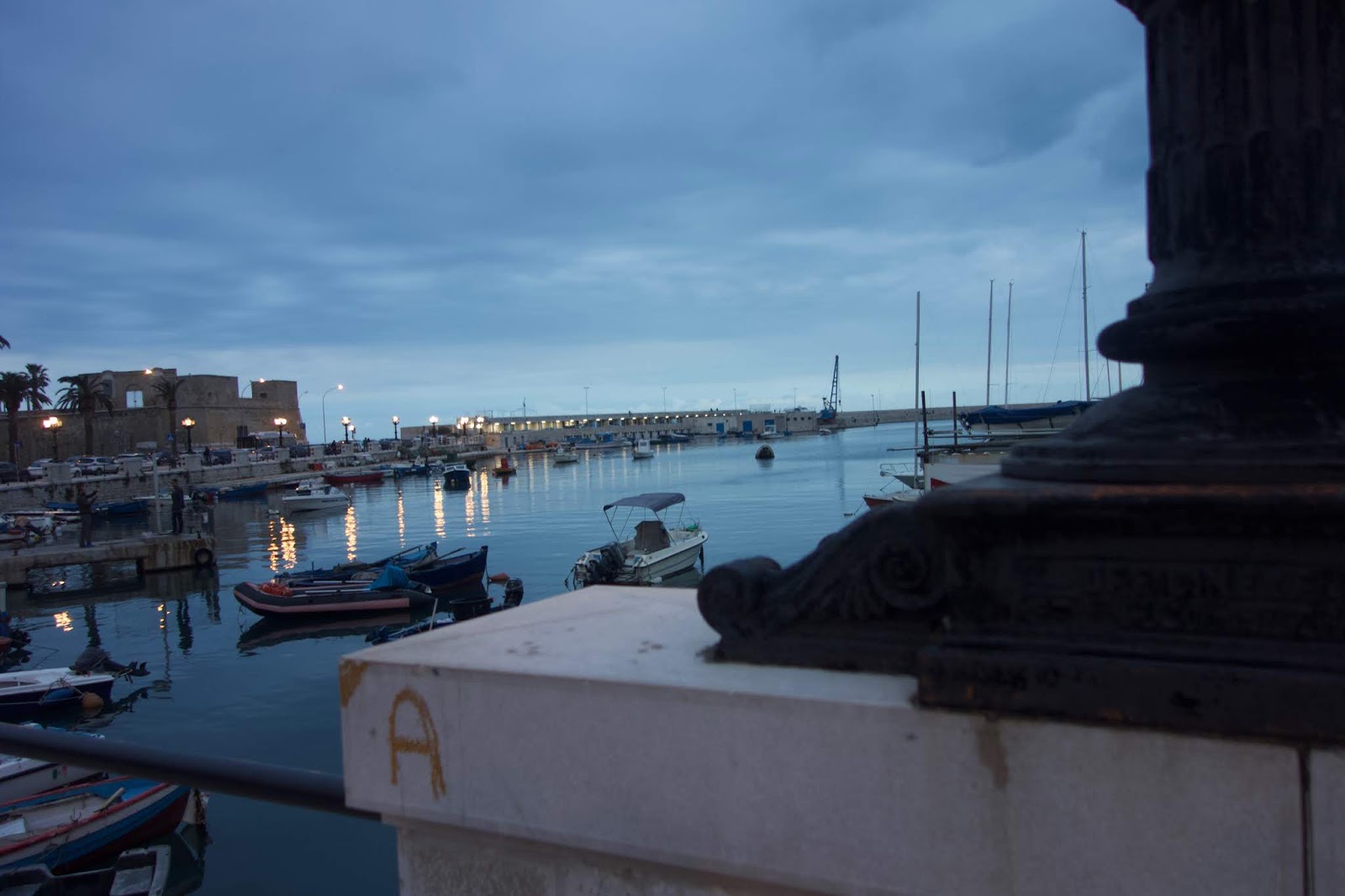
The Normans later rebuilt the huge stone castle, which still stands solidly in the heart of the old city, right on the water’s edge. Well worth a visit, as is the Basilica of San Nicola (1087), built to house the relics of St. Nicolas, which had been stolen by Italian sailors from their former resting place in Turkey.  When you visit the Basilica, be sure to look up at the vaulted ceiling. Gorgeous!

The Basilica of San Nicola

A portrait of the saint.

Saint Nicolas' tomb.


Yes, Saint Nicolas is THAT Saint Nicolas.  Interesting to note there is no solid historical evidence he ever existed. But, history leaves out more than it leaves in. 

Both the castle and the Basilica of San Nicola are built in a similar style.  Boxy.  Light colored stone. High walls.  Several buildings near the Basilica contain a convent, a museum and other connections to the church.

I know you’re thinking: How about more modern stuff?  Ok, you win. Bari did not become part of the Kingdom of Italy until 1860.  Anyone realize that Italy as we know it was not truly formed until 1918, after Italy defeated Austria-Hungary in the First World War?


The Teatro Piccinni is a wonderful opera house, also used for ballet and other performances.  Although I didn’t watch a performance, I understand the acoustics are superb.

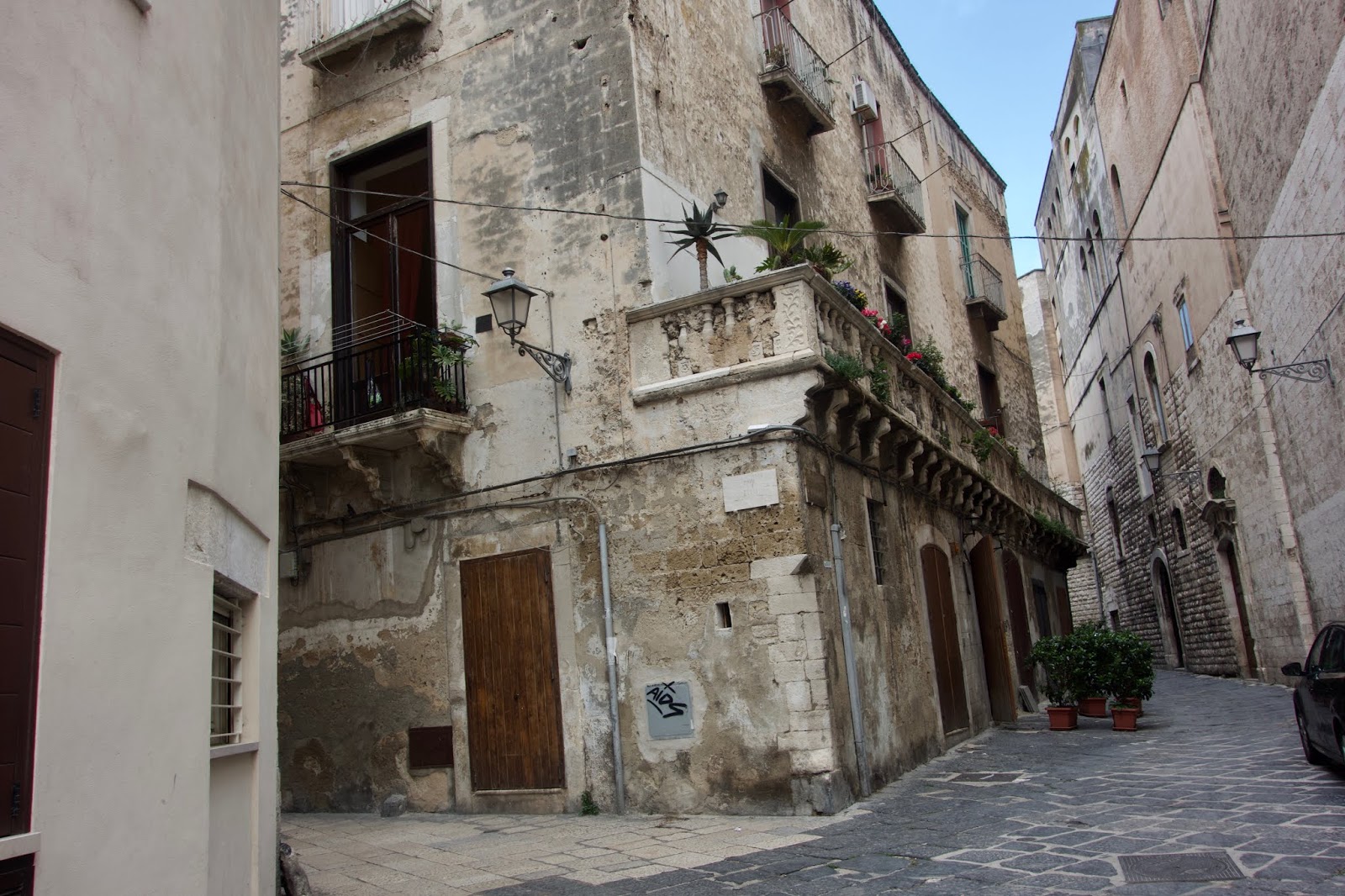
Back to the old town. The stone buildings narrow, cobbled streets and clusters of cafes and restaurants in the open plazas make for a fascinating visit.  Take a map or a GPS device.  Otherwise, you better drop some breadcrumbs along the narrow, twisting alleyways.  


The famous pasta of Bari:  orecchiette.

Besides the Basilica of San Nicola there are plenty of other churches to visit. And, on some streets you can watch older women making the famous Bari orecchiette pasta at a blazing speed.  The way they cut and form the pasta is one swift motion is incredible.

But, for me, the people you meet are far more important than the buildings, monuments, and even…dare I say it….the fabulous bottles of wine. I’m a big fan of serendipity.  But serendipity is just a piece of the puzzle of meeting people. Just don’t be too shy.  People like to chat.

Had a long and interesting chat and tasted a lot of wine at a winery selling Georgian wine..  More to come on that in another blog.

Struck up a long conversation with an Australian couple.  Politics, economics, investments….we ran the gamut. Fascinating!

Two amazing English ladies we met on a train on the way to the city of Alberobello, a unique beauty of a town that I’ll write about in a follow-on article.   I call these ladies English, but both spoke Italian, one fluently. Yes, they live in London, but one of them refers to herself as Italian. But, then you know how women lie.

They were on an adventure, just as we were, and I soon found out they had the right attitude.  We hopped off the train and when I mentioned Wine Time, they grabbed a table at the closest outdoor cafĂ©.   We noshed and sloshed and gossiped and suddenly this was no ordinary trip, but a traveling party!

For the next two days, the four of us travelled and partied and explored Bari and all around it.

Bari is a seaport and as you can imagine, we filled up on seafood.  The best octopus I’ve tasted, tender and succulent.  The ladies were staying on the edge of the old city and Italian fluency led them to the kind of enchanting bistros every traveler hopes to find.  Yes, I will write about one in the coming days.  Yes, I will name the restaurants and show off some wines!

If Bari may have begun on an edgy note, with a taxi ride though ravaged urban detritus that made me face death by a speeding weapon, it also led to a solid few days of exploration and memorable meals, to late nights, wonderful wines and epic camaraderie. So, would I do it again?

Just a moment and I’ll tell you. 44 is the country code for the U.K, right?


Saturday, April 6, 2019

Fog, A Poem With Photos


I met the fog this morning,
Awakened me at dawn,
Drifting through the stalwart trees
And on across the lawn.

I marveled at the chilly air
Accompanying the mist,
That bid me wander through the fields
To meet the Springtime's kiss.


Tuesday, April 2, 2019

London's Famous J Sheekey Restaurant + A Recipe


On our way to Leicester Square

Outside J Sheekey's Restaurant
J Sheekey

During our sojourn in London, amid the nights of thrilling theatre and the plebeian charm of public houses (pubs), and the wallet emptying time spent at more exquisite drinking establishments, we did manage a few wonderful meals.  One of my companions suggested J Sheekeys, catering to late theatre crowds for over a hundred years.

Sheekey’s also has an elegant oyster bar (J Sheekey Atlantic Bar) next door, which, sadly, we did not visit.

Often described as near Covent Garden,  J Sheekey is actually nearer to Leicester Square, in the heart of the theatre district. Besides the food, Sheekey’s has an interesting history.

Allow me to take you back to the glory years of Britain, at the height of its powers when “The sun never sets on the British Empire.”  But, I need to add a correction.

That quote about empire comes from a tome authored by Christopher North, who actually wrote: “His Majesty’s dominions, on which the sun never sets…”  The Majesty at the time (1829) was King George IV.

But, J Sheekey had a much more humble beginning.  In the 1890s, Josef Sheekey, a fish monger at Covent Garden, asked permission to serve fish and shellfish.  Lord Salisbury, the Prime Minister at the time (he was three times Prime Minister) gave his permission, but with the proviso that Sheekey would supply food for Lord Salisbury’s late, after theatre dining parties.

Lord Salisbury

And who was the Monarch at the time Sheekey’s was born?  Queen Victoria (Queen 1837-1901), the longest reining British monarch until the present Queen Elizabeth II. 

You see, you’re missing half the fun if you go practically anywhere in London, or in England for that matter, and don’t inquire about the history and the personalities who made that history.


Now it’s time to visit the dining room of this old and very plush restaurant.  As you might guess, the diners were all well dressed, as were we, in slacks and sports coats and shoes that would go well with a suit.  Nor did we gnaw our food in great ripping chunks and tuck a corner of our yellow cloth napkins into the necks of our shirts.

Neither did drinks of the adult sort have an appeal.  I had already sloshed down two strong gin and tonics before the start and at the intermission of the raucous play we just saw, “Only Fools and Horses,” at the Theatre Royal Haymarket (dating to 1720, third oldest in London).


Theatre Royal Haymarket

The waiter, dressed in a dark suit, and with the careful elegance of experience, took our drink order and returned to accept our dining requests.

“Water please, and keep it coming!”

I opt for the famous J Sheekey fish pie.  Creamy and delicious.  Others ordered prawn curry, flounder, and a bone-in sirloin.  I did not get a chance to taste the other dishes as my companions guarded their troughs with angry eyes.  


The food was not only wonderful, but the atmosphere felt so upper crust London-ish and yet had the relaxed air that promotes conversation and leisurely dining.  Londoners of this ilk speak in hushed murmurs, which make it annoyingly difficult to eavesdrop.


Should you get to London and take in a theatre performance, you might consider treating yourself to a luscious after theatre treat at J Sheekey.

But, suppose you can’t get there right now. Perhaps your horse is in the running for the Derby, or you simply can’t tear yourself away from Wall Street, or god forgive you if you’re not at the showroom when the new Bentley arrives.

You have my heartfelt sympathy and as a consolation, Madame et Monsieur, I offer you a recipe for J Sheekey’s famous fish pie, that your Cordon Blue trained chef can easily prepare for your late night dinner party.


J Sheekey’s Famous Fish Pie
Preheat oven to 350ÂşF

The Fish:

8 oz cod (or any white chunky fish), cut in 1 inch chunks
8 oz Salmon, also cut in 1 inch chunks. 
8 oz of smoked haddock, or use smoked trout
small amount of parsley, chopped

For the sauce:
2 Tablespoons butter
2 Tablespoons flour
½ Cup white wine
2 Cups fish stock
1/3 Cup heavy cream
Juice of half a lemon
1 teaspoon English mustard
1 teaspoon Worcestershire Sauce
½ of one anchovy filet, mashed to a paste (or ½ teaspoon anchovy essense)

For the topping:

2 pounds of potatoes, peeled, boiled and dry mashed
4 Tablespoons butter or a bit more, as needed
¼ Cup of milk
2 Tablespoons breadcrumbs
Some good shakes of grated Parmesan cheese

Put it together:

Melt the butter over low heat and gently stir in the flour. Gradually add the wine, stirring well. Slowly add the fish stock and stir until the sauce is creamy.  Bring to the boil and then simmer for fifteen minutes.
Add remaining ingredients, stirring, and very briefly bring the sauce to the boil again.  Add more Worcestershire and mustard, if you want it spicier.  Season with salt and pepper.

Gently stir in the fish and parsley.  Pour into a large, high-sided dish, until about an inch from the top.  Let the mixture cool.  This will allow the topping to sit on the top, rather than blending into the sauce. 

Mix the milk and butter into the mashed potatoes and stir until soft enough to spread over the fish mixture.  Pipe or spread the mash potatoes over the fish mixture. Pop the dish in the preheated oven for 30 minutes.  Sprinkle on the breadcrumbs and cheese and bake for another 10 minutes.

There it is!  An historic taste of London right in your own mansion!  

But, I’m curious.  What color Bentley did you order?  I prefer the Cirrus (white) or perhaps the Lustre (gun metal gray) or Tourmaline (an elegant dark silver blue).


Saturday, March 30, 2019

Rustic Lemon Coconut Pie


Some have asked about my cooking process. Short answer:  eclectic at best. And rustic.  Rustic covers so many short cuts. The godsend for a sloppy cook.

Here are the lyrics and the melody from my Saturday afternoon pie making:

1. Suddenly decided I wanted to make a pie.
2.  What kind of pie filling do I have?  Ah, lemon and cherry.
3.  Lemon sounds good, but I need to doctor it a bit.....hummmmmm.... 8 oz.cream cheese?  And I can add some grated lemon rind for freshness.....and I think I'll toss in some sweetened coconut flakes.....feeling a bit tropical today.  Sun is out.  Add a half-cup of sugar.
4.  Many recipes call for a couple of eggs.....ok, no problem.
5.  Wait a sec!  I need to make a pie crust.  Ok, I can do that, but no way I'm going to let it sit in the refrigerator for an hour.
6.  Easy pie crust in the food processor:  2.5 Cups flour, 1 stick chilled butter, 8 oz of Crisco, 1/2 teaspoon salt.  Think I'll add a couple of Tablespoons of sugar. 3-4 drops cold water.
7.  Hit the button.  Done!  Roll it out.  Put it in my oversized pie plate.  Make room and slide it in the frig while I make the filling.  
8.  Using the same food processor, but rinsed and dried.
9.  Bam!  Pour the filling in the pie. Paint the crust with some egg yolk and slap it in the preheated 350ÂşF oven for 35 minutes.

Out it comes, but too hot to cut…..well dang!  My mouth was already aquiver.  Ah, well, cooked pie goes back in the frig…I can wait, I think.

Wine is open.  That’ll help with the waiting…Should have had a yen for cookies…woulda been quicker….eat ‘em straight from the oven.  Don’t even need a plate.  How long has that pie been in the frig???


Friday, March 29, 2019

Four Great English Pubs

Blackfriars Pub


Four Great English Pubs

I’ve often written about one of the great English institutions, the pub.  Few towns don’t have one and the cities are clustered with them.

Those unacquainted with the institution will immediately comment:  a pub is just another name for a bar.  Oh, how wrong you are!   Something you must do immediately is buy a plane ticket to London.  But, first read a few of my scribblings and acquaint yourself with what you’ve been missing.  After that, the necessity for a London trip will flash in bold print at the top of your mental list of things to do before you’re too old to drink.
London Pubs:


Oxford Pubs:


That’s enough to give you a glimpse of what’s to come.  Now for a couple of misconceptions I need to clear up. FIRSTLY, a pub is not a bar, it’s a place of comfort for social gatherings and a social leveler.  Men in suits and men in scruff of paint splattered pullovers and scuffed boots sit side by side to calmly sip a pint. Ladies of a certain age, dressed to the nines, may be at one table, while young things with tattoos and piercings may be at the table beside them. In a society known for levels of social order, the pub offers freedom in its clearest form.

As I saw on a sign in one pub:  Beer isn’t a matter of life and death.  It’s far more important than that!

A pub has a certain homey feeling, as though you’re sharing drinks and telling lies in a private club that anyone can join.

Now, about the beer:  I prefer the hand pulled variety, straight from the cask.  For my taste buds, it’s smoother and more flavorful.  British beers are neither flat, nor warm.  Casks are stored in the cellar, where it is always between 50 and 60 degree Fahrenheit, and when the beer is brewed, a natural fermentation and carbonation occurs, giving the beer a very light head when served.  Not the very fizzy carbonation of most German and American beers.  Brit beers go down smoothly, with an abundance of flavor.  Alcohol content is roughly 3.5 to 5.5%.

Now that we’ve gotten the preliminaries squared away, allow me to introduce you to four wonderful pubs: In London, BlackfriarsThe George, and The Footman.  In St. Alban’s,Ye Olde Fighting Cocks.

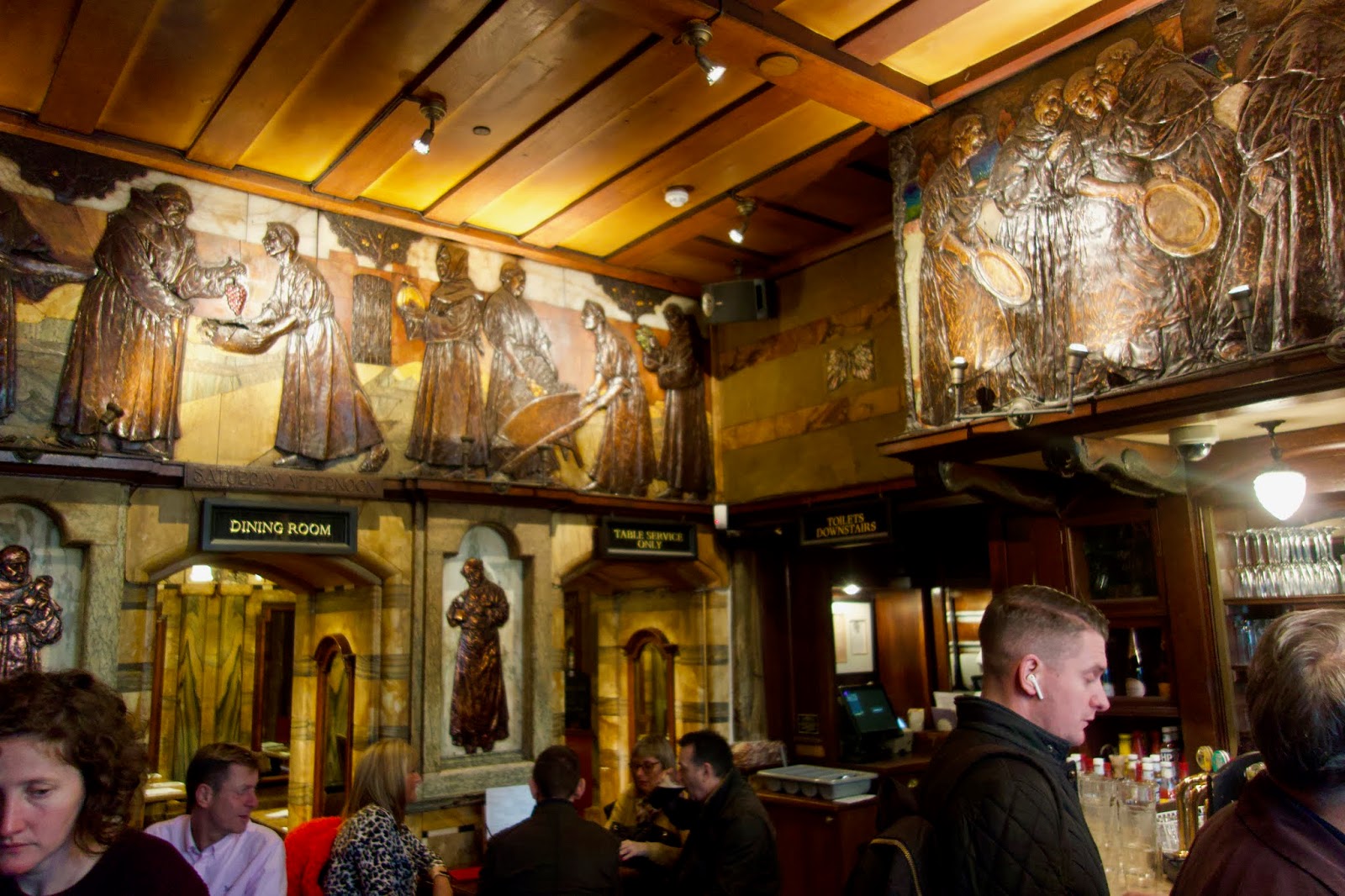
Blackfriars: One of London’s oldest pubs and certainly its interior is the most striking, with a profusion of marble, tiles, and large bronze bas-reliefs of monks doing their chores.  In short, from history and interior, it’s unique.


By the way, another misconception, this one in the English language, is that unique can be modified, as in very unique, or most unique.  Au contraire, mon ami, unique cannot be modified for the simple reason that it means one of a kind.  If something is one of a kind, it cannot be the most one of a kind.  There are other words like this, but let’s get back to Blackfriars.

Although it dates only from 1875, it was built on the grounds of a former Dominican friary (Dominican monks wear black cloaks).  Above the bar,  the monks are fishing and the accompanying saying is: Tomorrow will be Friday. At the entrance to the grotto, there’s another relief titled:  Saturday afternoon, with a portrayal of monks gardening. Dominicans are also called The Order of Preachers and the order dates to 1213.

Some other pithy saying accompanying other monks on other walls:  Don’t advertise, tell a gossip, with monks doing wash.   A good thing is soon snatched up, depicting monks carrying a trussed pig.  Another pithy saying is:  Haste is slow.
Now you know more than most of the patrons, so settle in, let the atmosphere penetrate and enjoy a pint….make that two.

The George: Be careful, there’s more than one The George, but the one you seek is London’s last surviving galleried coaching inn, in Southwark, near Boroughs Market. First mentioned in 1543 and rebuilt after the fire of 1677, it was also known as an inn-yard theatre, where Elizabethan theatrical productions were performed.  Not known if Shakespeare performed here, but we do know Charles Dickens stopped in for a coffee on several occasions, and included it in one of his novels, Little Dorrit.


Do grab a copy of a Charles Dickens novel and settle in for an afternoon of soaking in the atmosphere….or getting soaked in this atmosphere.  See, that’s another thing about an English pub.  You can grab yourself a pint and fritter away the time in dreams of greatness, for as long as you want.  Read.  Write. Draw. Let your imagination rip!

The ground floor is divided into three parts. The Parliament Bar was a waiting room for coach passengers, and the Middle Bar was a coffee room.  Upstairs is a restaurant.  Only half the Inn remains.  The gallery that faced the remaining part of the building was torn down to make room for a railroad warehouse. 

We went to Boroughs Market right before we ambled to The George.  We may have even stopped at another pub. Could have happened. 

You dare not miss the Boroughs Market.  It’s a stroll and eat affair.  Fresh oysters, salted beef sandwiches, best salted caramel ice cream I’ve ever lapped from a cone, and a huge variety of ethic food stands.  But, at the end of it, a man must have his pint! 

The Footman: Located in the Mayfair, in one of the most upscale areas in London, The Footman has a long history, dating to 1749 and has thrived under a long list of names to include The Running Horse, The Running Footman, and I Am the Last Running Footman, by which it was known when I first visited in the 1980s. So, what is or was a running footman? Those of the English wealthy class had any number of servants and lived in fine mansions and were driven places in luxurious carriages.  A running footman’s job was to run ahead of the coach, to pay tolls, and clear the way, which in old London was essential.  To tell the truth, new London is worse.  Traffic has only increased, now that even the drinking class has a horseless carriage.  Come to think of it, there are probably as many chauffeurs now as there were running footmen back then.


It was quiet when we visited; in fact, we got our pints, chatted with the friendly barkeeper, and pretty much had time to sit at the window facing the street and slosh beer as we watched a parade of Rolls Royces and Bentleys and a few Ferraris arrogantly drive by. Porches didn’t merit a second glance.  They really didn’t belong here.

Which brings us to Ye Olde Fighting Cocks, in St Albans, about 20 minutes by train from Paddington Station.  Why go there?  First off, Ye Olde Fighting Cocks is reputed to be the oldest pub in England.  I say ‘reputed’ because several pubs make that claim.


Reputed is a strange word. Does it come in a singular form. If the pub was reputed to be the oldest, did someone repute it? Anyway, this one’s only solid date is 1756.  But oldest or not, it’s well worth a visit. And, if you’re tall, prepare to duck and weave.  The old blackened beams overhead are a threat to anyone over six feet.  Also, it’s a country pub, which is a wonderful difference from spending the day dashing through the streets of London, dodging cars and cabs as you try to remember whether to look left or right when crossing.  If it had been a sunny day and a mite warmer, we would have parked ourselves outside.

We also made the pub a lunch stop and the food was excellent.  Not quite totally English, but my taste buds came from a family of serfs, and they begged for a burger and fries.  I tried to resist, but now that the taste buds were free, they did what they wanted.


St Albans

Much more to see in St Albans.  I found an antique shop and bought a lovely 19thCentury, cut glass pitcher for $20.  Try and do that in London.  On Wednesdays and Saturdays, St Alban’s has an open market.  And near Ye Olde Fighting Cocks is a huge park, which was once the site of the third largest Roman city in Britain.  Many of the old walls remain.  As you tour Europe, you quickly see why the history books refer to The Roman Empire and damn well mean it!

The park and site of the Roman city


Are you getting an inkling of why I like pubs so much?  Fabulous beer, yes, but also history and literature and markets and adventure. Pubs bring life to life!