Showing posts with label riesling. Show all posts

Tuesday, October 17, 2017

Biking On The Mosel River


Sometimes when I write for my blog, it takes several hours, but today, writing about the Mosel River, it just flows.

You see, last weekend, I went for a lengthy biking excursion with friends.  Ok, they weren’t real friends, just fishermen who chased me when I grabbed their poles.  My legs got a workout.  Only kidding.  I really do have friends.  They really do bike.  I borrowed my wife’s bike, which is single speed, with big tall handlebars right out of Easy Rider, decorated with fine spots of artistic rust.  I wore jeans, tennis shoes and a baseball cap.  Yes, I flaunted the fashionistas who decked themselves out in two thousand dollar touring bikes, custom filled helmets, Spandex biking clothes by Yves Laurent, riding gloves and specialty riding shoes for which several sheep gave their lives.  But, did I mind the angry stares that screamed, “For God’s Sake man, can’t you at least wear designer jeans?”  Nope. I go for Wranglers that have been twice dyed indigo blue.  My ball cap is a custom creation of previously sweaty afternoons and the crush gained through years of careless use.  I strive for originality.  Some would call it grunge.  I pay no attention and make them buy their own wine.

But, enough about me and my keen sense of fashion. Let’s chat a moment about one of the most glorious rivers in the world and definitely the finest region for Riesling wine.  If the wine merchants on the Rhine River disagree, ignore them.


At The Beginning:  The Mosel’s source is about 2400 feet (715 meters) high in the Vosges Mountains of France.  Bet you thought the Mosel was strictly a German river.  Mais, non, mes amie!  Matter of fact, only 142 miles (208 Kilometers) of it’s 334 mile (544 Kilometer) length is in Germany. Another 24 miles (39 Kilometers) is a shared border between France and Germany.  It flows into the Rhine at Koblentz.  Luxembourg also gets a little share.


So, where does the Mosel River (Moselle in French) rank among the largest rivers in Germany?  So glad you asked. Goes like this: Danube, Rhine, Elbe, Oder, Mosel.  But most lists include the full length of the rivers, not just the German portions.


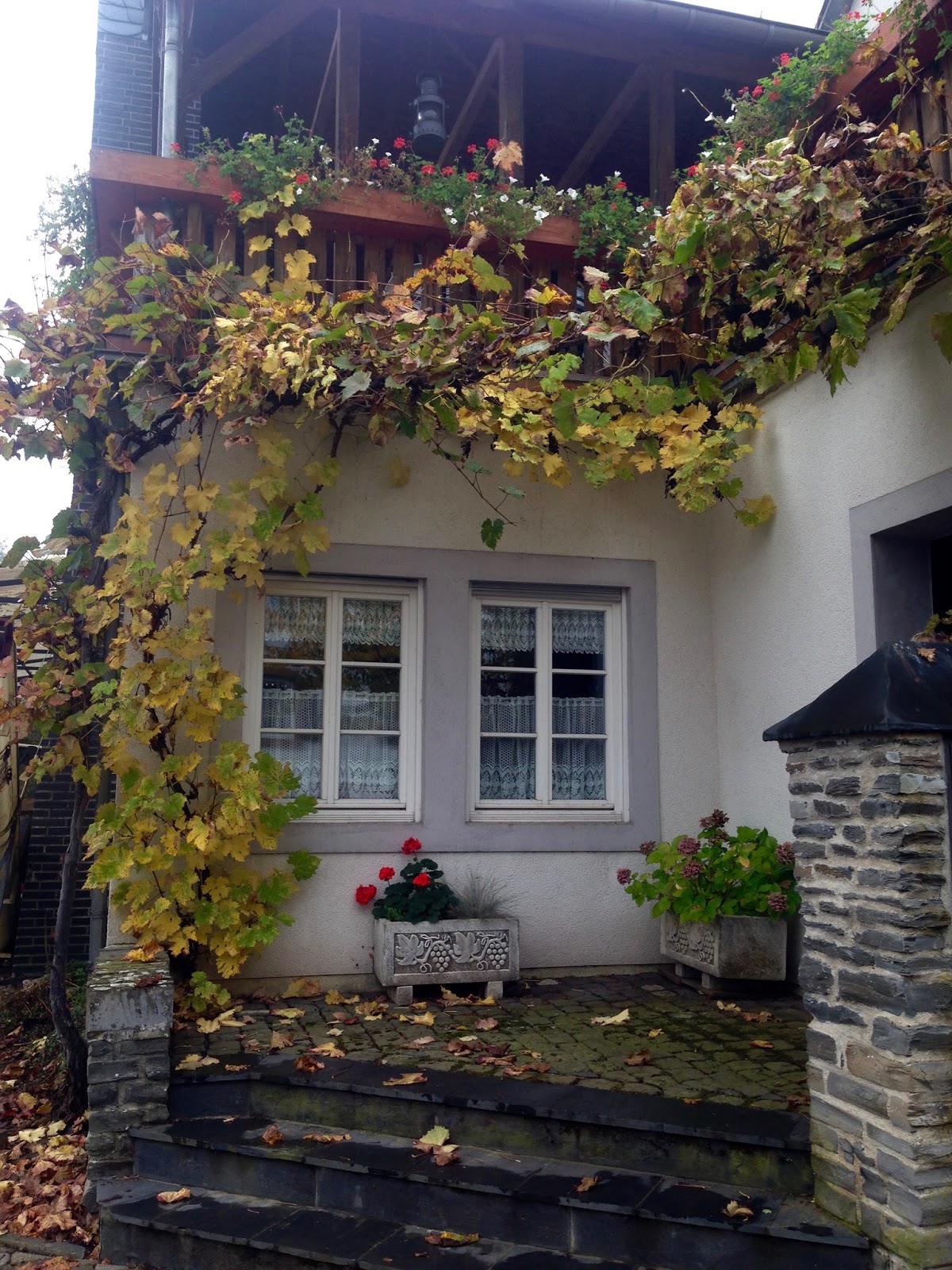
Ok, let’s chat for a moment about wines. Forget which German region produces the most, or most famous, or any other superfluous balderdash. Those just don’t matter and for my taste, the Mosel ranks numéro un, or Nummer Eins.  I love the soft flavors that are often attributed to the shale in the soil.  Ride your bike along the river and you’ll see stacks of slate, and if you look closer at the vines, it looks as if they are planted in gray gravel.


Most of the vines that run up and down the steep hills and over the flat lands produce Riesling grapes and overall, the valley is planted with 90% white grapes, of which 61% are Riesling.

Feel like tasting?  Seems like every five feet there’s another vintner offering Wein Probes, wine tasting.  Maybe every five feet is a bit of hyperbole, but I swear you’ll find ten or more vintners in even the small villages that line the route.  Some offer free tasting and others want a very small payment.  Yes, there are sparkling wines as well as a few reds.  Most wines price out at $4 to $7 per bottle, for some of the best white wines in the world.

And guess who first planted grapes in this region?  The Romans, of course.  As you drive or ride along the river, you’ll see signs that point to a Roman villa here or there, or ruins, or other artifacts.

But, most of all, taking a bike trip for a couple of hours through the lazy, beautiful curves of the Mosel is a treat that soothes your senses.  Admire the steep slopes, gaze across the green valley almost totally dedicated to wine.  Why deprive yourself? No need to make this painful.  After biking a mile or two, stop for luscious wine or a spot of lunch.  Oh, yeah, punish me. And at none of the places you’ll stop will you find a dress code.  Pick a Roman god to thank for that.


Thursday, March 17, 2016

Kallstadt! Let the Wine Tasting Begin!


Along the Wein Straße
Another weekend of wine.  First tasting of the year was the ‘Open Cellars’ Day in the tiny town of Kallstadt on the German Wine Road (Deutsche Wein Straße).   Not sure where that is?  Count on me to fill you in.


Next Question.  What is an open cellar day versus a wine fest?  A wine fest is an all-vintner production in the city streets, teeming with crowds of the ever thirsty.  Booths of wine and beer and schnaps.  The scent of roasting Wurst floating temptingly past your nose and dashing all hope of moderation.  Throngs of gallant wine guzzlers doing their best to stimulate an economic recovery.


On the other hand, an open cellar day is far more intimate. You pay one price, in Kallstadt it was 15 Euros, then you walk down the street, going from vintner to vintner, strolling their cellars, taking selfies in front of huge wine casks, sipping wine, chatting with your hosts, discussing the pros and cons of this wine and that. Drinking more wine.  Damn, this glass never gets empty!


But, do vintners just specialize in one type of wine?  How many questions do you have????  Ok.  Patience.  Fortitude.  Often, even the small growers have several species of grapes, which they sometimes combine, and which they ferment to different levels of sugar and alcohol.  The most popular grape in Germany is Riesling and the tiny town of Kallstadt has its share.

In Germany, Riesling is KING!
On our visit, we arrived late and only got to two vintners, but they were special.  Our favorite was Roland Christ, not nearly as large as some of the others, but a jewel of a winery.  When we walked along the cobblestone courtyard and through the solid door, into the tasting room, it was as though we’d stepped into the middle of a family gathering.  Big family.  Maybe fifty people.  The wine selection ran from white to red to rosé and varied in sweetness from super dry to dry to mellow and sweet.

Just to give you a hint.  Everyone has personal preferences, but no matter which you choose, there are NO bad wines in Kallstadt.  We bought a number of bottles and carefully tasted and savored many more.


For those of you who have not been to Germany in a while, let me offer a tip about German wines in general.  Tastes in Europe have changed dramatically.  No longer are German reds, such as Dornfelder and Spätburgunder (Pinot Noir) something to avoid.  Also, thirty years ago the whites were only different levels of sweetness.  Now there are dry and semi-dry and any number of other levels before you get to the sweetness so common decades ago.  Nor can you go by the old rules of Spätlese and Auslese always being very close to dessert wines.  Not familiar with the terms?  Spätlese is a late harvest picking.  Auslese is a select picking from very ripe fruit. Ice wine is a pressing when the grapes are frozen.  Here’s a quick glance:


But, dry or not-so-dry, or sweet, one thing most Germany wines have that other countries don’t is a wonderfully heavy nose of fruitiness.  Give me a glass of Pinot Grigio and I’ll tell you it tastes good or doesn’t.  Give me a German Riesling and the pungent essence of apples and pears come bursting through like you’re standing in an orchard.  Why is that?  My, you’re full of questions, but fortunately for you, here I am.  Riesling is grown in other countries, but it won’t taste the same.  As the nose-in-the-air (or glass) experts say, Riesling is “terroir-expressive.”  Even a novice wine swiller such as yours truly can tell in a sniff and a taste that German Rieslings are not the same as French Rieslings, which are grown only 45 minutes away.

A final question?  Ok, shoot.  Why are you giving us this information on an open cellar day that is past?  Oh, ye of little faith.  The wine tasting season is just beginning and I’m here to pique your interest.  Next weekend, par example, the Deutsche Wein Straße features the celebration of the blooming of the almond trees.  Really?  Yep.  Not making that up.


But, celebration or not, wine fest or not, you can drive through any wine growing region in Germany and do a Wein Probe – a wine tasting.  Just spot a vintner with a sign outside, park the car, sip a while, chat a while and prepare to become a connoisseur of some of the most flavorful wines in the world.   Meanwhile, I’ll see you this weekend on the Deutsche Wein Straße at the Almond Bloom celebration.  Prost!


Wednesday, April 29, 2015

Looking For Sekt In All the Right Places


An eclectic group of Germans and Americans gathering for Sekt!
Everyone knows if you want to call a sparkling wine Champagne, it better be grown in the Champagne region of France.  Other places call it other things. Even in France, if it’s not from Champagne, it’s usually called Crémont.   In Germany, it’s called Sekt, and comes in the usual array of dry, extra dry,etc.  But, even within those general descriptions, there’s a lot of variety.  Different grape varieties, different soils, different amounts of rain and sun, and most of all, different vintners.


Last Saturday, I wandered vineyards on the hillsides overlooking the widest part of the Rhine River (the famous Rheingau region) and tasted a river of delicious Sekt.  Barth Wein und Sektgut is a family run affair, covering 30 hectares. How big is a hectare ?  Funny you should ask.  I had the same question.  1 hectare = about 2.5 acres  Yeah, fine, but I wasn’t born next door to a barn.  How big is an acre?  43,460 Sq Ft, or 4,047 meters, both of which are about the size of a football, or soccer field, but not quite as long.


As both of my faithful readers know, 30 hectares on German vineyards are spread out all over the place, a patchwork result of literally centuries of wine growing.  Vineyards are bought and sold, children split up their inheritances, and so forth.  Barth’s vineyards are no exception.  Not sure exactly how far apart their hectares wander, but the tour took four hours, including a short stop for lunch.   If you’re using a pedometer, that’s 7000 paces, more or less.  Tours are only twice a year, spring and fall.  And, with the first two hours entirely on gentle to steep hills, make sure you’re reasonably ambulatory.

In our wandering, we paused six times, both to hear about a particular area, check out the soil type, and sample Sekt from grapes grown right where we were standing. There were Riesling Sekts, both Brut and Extra Brut, Pinots: Ultra, normal, and Rose.  In short, Barth offers an excellent Sekt to suit any palate, all from grapes grown on 100% organic vines.

What about the taste?  Dry is probably the most popular, even among those whose lips have never touched sparkling wine.  News travels.  Barth’s Sekt Ultra, made from pinot noir grapes, is quite dry, full bodied, and with a fruity nose.  The Riesling Brut, on the other hand, is lightly touched with sweetness, equally full bodied, and with a creamy finish.  Which is best?  Well, you’ll have to answer a few questions and then draw your own tasting conclusions.  Are you drinking the Sekt with a meal, or just lounging on the beach enjoying the bikinis?  If it’s the latter, the choice really doesn’t matter, does it?


This Wein und Sektgut family is particular!  Many of the vines are over fifty years old, but there are also new plantings.  Soil management is of equal concern.  Some years vineyards lay fallow.  Quality is always at a premium.  If a crop doesn’t meet Barth’s high standards, grapes from that hectare will not be used for wine or Sekt.

Interesting facts about Barth Sekt:

-       50% of Barth’s product is sold through direct retail, the rest is sold to secondary sellers, such as restaurants, and also exported around the world.  That means you can probably find Barth wines where you live.

-       It’s not unusual to see wild boars harvesting grapes, depending on how much food they can find in the nearby woods.

-       Not all finished bottles are labeled right away.  Some remain unlabeled until they are shipped abroad and then labeled to meet the laws of the importing country.

-       The Rhine flows generally south to north, but where the Barth vineyards are located, the river flows east to west.

-       Having plots of land in different areas means Barth’s separate hectares have different soil compositions and therefore produce different flavors, even when growing the same variety of grape.

-       Riesling has always been the most popular variety, but now that tastes have changed, Rieslings are grown not only for sweeter wines, but for dry and extra dry Sekt as well.

-       Each year, grape vines are lightly trimmed and the vines trained on wires to grow flat instead of straight up.  This allows more sun, and also allows the wind to dry the grapes and prevent fungus.

-       Using the traditional methods of production, Sekt is allowed to ferment in the bottle for as long as 24 months (two fermentations) and turned (riddled) a quarter turn by hand for a month before the yeast is removed (disgorged).


-       During bottled fermentation, the bottles are capped rather than corked.

-       For the normal bottles, disgorging is done with a mechanical device, but with the larger bottles, it must be done by very quick hands.

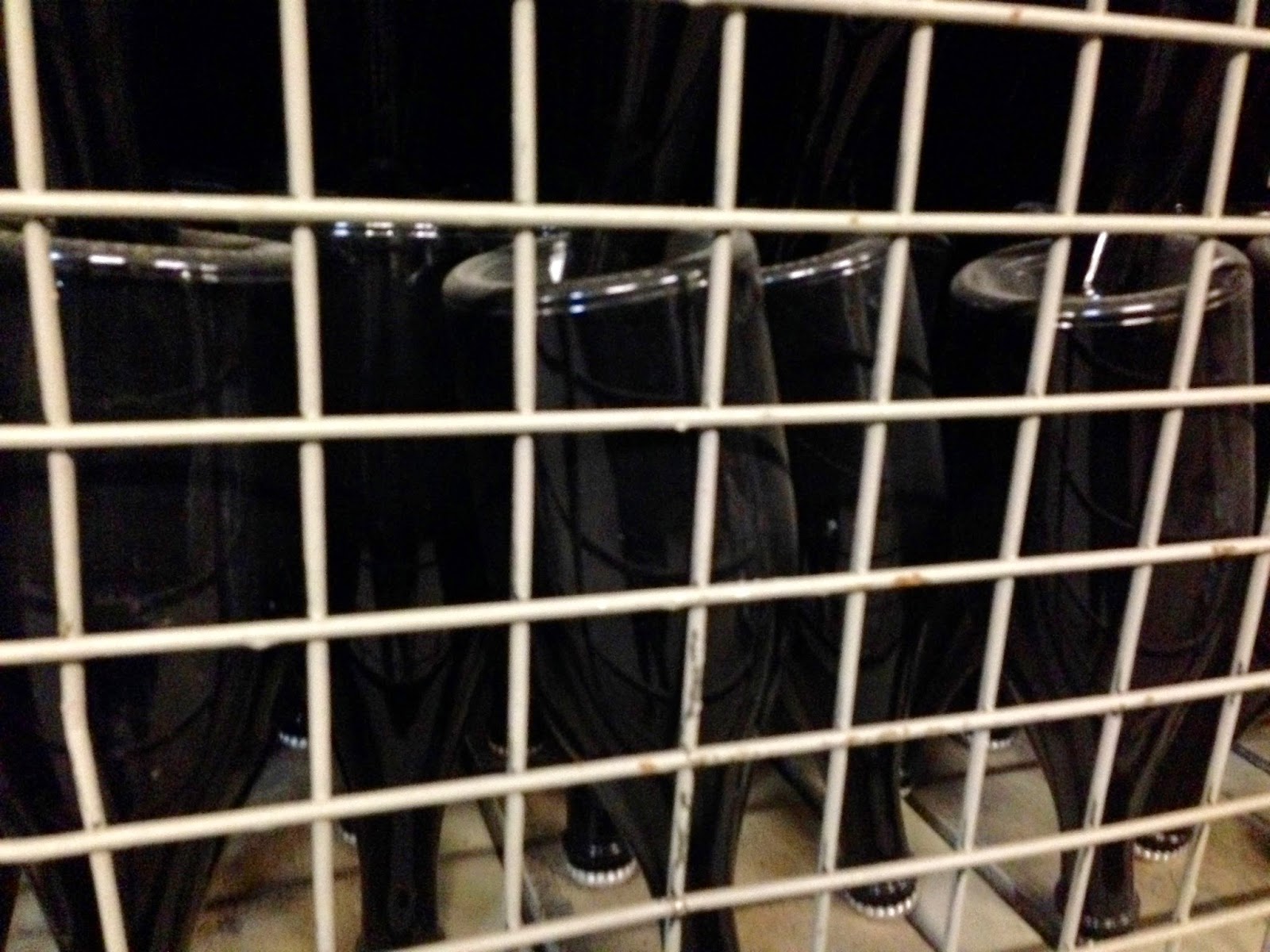
Sekt ready to be disgorged.

-       Easy to tell which bottles are being readied for disgorging.  They’re standing on their heads, allowing the yeast to collect near the cap.

No better way to spend the day, wandering vineyards overlooking the majestic Rhine River and sampling Sekt from one of the region’s great Sekt producers.

As Barth notes on their brochure, “Wine is our discipline, sparkling wine our masterpiece.”  That’s not an exaggeration.  Just ask anyone who’s tasted their Sekt.

Want to read more and explore upcoming events at Barth Weingut?  http://www.weingut-barth.de


Initial fermentation:  looking for 6 psi.

The final result of thousands of hours of work:  Sunshine in a glass!